Crypto hackers keep trading with stolen funds
While the majority of crypto hackers and exploiters focus on covering their tracks, some continue trading in the market using stolen funds.

Image by Cybernews.

 Follow us
While the majority of crypto hackers and exploiters focus on covering their tracks, some continue trading in the market using stolen funds.
Most recently, the hacker who stole more than $300 million from Coinbase users was caught by Lookonchain analysts trading almost $8 million worth of solana (SOL) on Sunday. This followed other trades in July, when the criminal acquired at least $14.8 million worth of ethereum (ETH).
Meanwhile, earlier this month, the same analysts caught the Radiant Capital hacker trading ETH and making at least $2.76 million in profits.
"They bought 4,913 $ETH ($20.47M) at $4,168 three days ago, then sold 4,131 $ETH ($19.52M) at $4,726 over the past five hours. Their stolen $49.5M stash has now grown to over $105M (+114%)," Lookonchain said back then.
As reported by Cybernews.com, Radiant was exploited in October 2024 by sending a malware-laced PDF to company engineers.

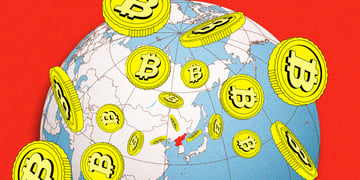




However, as is usual with trading, some deals end in losses. For example, a wallet labeled by the same analysts as likely belonging to hackers lost almost $7 million while trading ETH.

Additionally, a hacker associated with North Korea lost around $2 million by shorting ETH this month when the price rallied. Security expert and researcher Taylor Monahan from the most popular ETH wallet, MetaMask, noticed this.
"They're just playing with some side money while they're waiting to cash it out," Monahan said, adding that these hackers "trade better than most" regular traders on "Crypto Twitter."
While centralized exchanges can freeze illicit funds, criminals opt for decentralized exchanges where they can swap their tokens without permission.
For example, in the North Korean hacker case, they used the Hyperliquid platform, according to Monahan.
"They’ve hacked every other exchange with decent [perpetual contracts] and won’t risk getting frozen," she concluded.