Public and private sectors grapple with crypto crime as more challenges await
Recently, at least three initiatives have emerged in an attempt to prevent and fight crypto-related crimes. However, a blockchain security expert warns of more challenges to come.

Image by Cybernews.

 Follow us
Recently, at least three initiatives have emerged in an attempt to prevent and fight crypto-related crimes. However, a blockchain security expert warns of more challenges to come.
The latest is a real-time crypto crime response network, Beacon Network, launched by blockchain analysis company TRM Labs.
Multiple top crypto exchanges, including Coinbase, Binance, and Kraken, as well as fintechs such as PayPal, Robinhood, and Stripe, and other companies are among the founding members, while "leading federal law enforcement agencies" and security researchers and firms are also contributing to the network.
Beacon promises to help react to crypto-related crimes faster by flagging addresses linked to financial crime and propagating those labels across related wallets. Once tagged funds arrive at a wallet controlled by the network member, an instant alert is triggered, and the platform can review and hold flagged deposits.
As reported by Cybernews.com, crypto platforms have been criticized for reacting too slowly to crimes, while criminals are now moving stolen funds faster.






Meanwhile, as a separate initiative, the US Department of the Treasury is consulting with the industry regarding innovative methods for detecting illicit crypto-related activity.
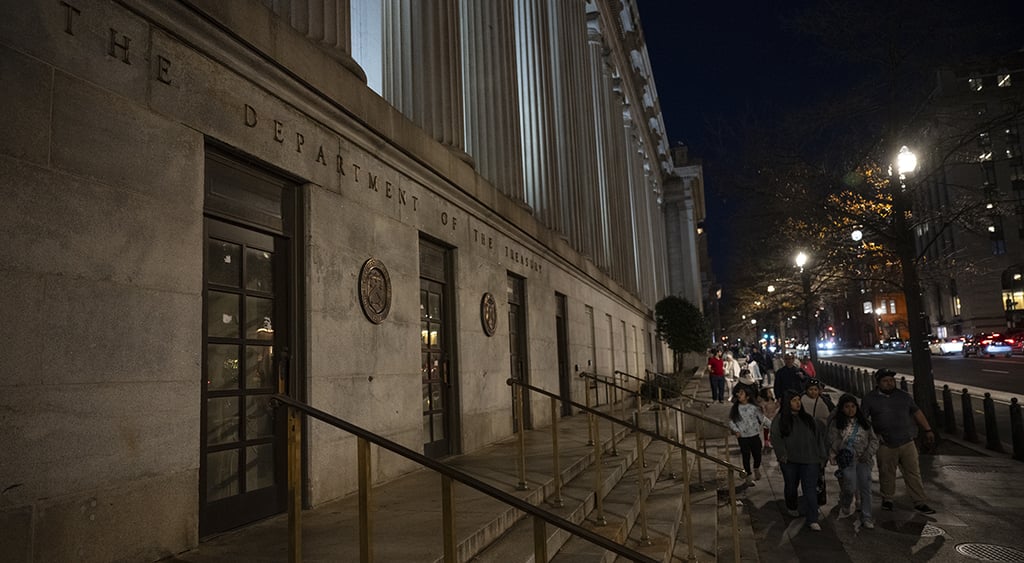
"Innovative tools are critical to advancing AML/CFT and sanctions compliance. Financial institutions can leverage these tools to protect the digital asset ecosystem from misuse by illicit actors <...>," the Department said.
Elsewhere, the Bank for International Settlements, an organization of central banks, published a paper suggesting an anti-money laundering (AML) compliance score based on the likelihood that a particular crypto asset unit or balance is linked to illicit activity.
If this system is implemented, people’s ability to use their crypto assets would depend on the score. According to the authors of the idea, this would support "a culture of duty of care among crypto market participants."
However, popular blockchain sleuth ZachXBT, who also contributes to the Beacon Network, recently raised multiple challenges that might fall outside the scope of the initiatives above.




For example, he asked what happens when the majority of law enforcement (LE) is not competent enough to trace a basic theft and seize frozen funds from centralized platforms, or when smaller thefts are never assigned to LE due to a lack of resources. Other challenges, such as differences among jurisdictions, difficulties in pursuing minors, costs of catching criminals, and remaining legal obstacles, are among the yet-to-be-answered complex questions.
"These are all major problems no one has been able to solve and continue to get worse as bad actors improve their efficiency while nothing changes," ZachXBT concluded.