Pro-Ukrainian hackers take over Russian TV on UA Independence Day
Pro-Ukrainian hackers take over Russia’s TV airwaves on the 34th anniversary of the war-torn nation’s independence from Moscow, replacing its regular programming with hours of damning battlefield footage.

Image by Hlib Shabashnyi | Shutterstock

 Follow us
Pro-Ukrainian hackers take over Russia’s TV airwaves on the 34th anniversary of the war-torn nation’s independence from Moscow, replacing its regular programming with hours of damning battlefield footage to show the "truth" of war.
- Pro-Ukrainian hackers hijacked Russian TV on Ukraine’s Independence Day, airing footage of battlefield losses.
- The Belarusian Cyber-Partisans, responsible for a July attack on Russia's Aeroflot airlines, are suspected but haven’t claimed responsibility.
- The footage aired for three hours on 116 channels across at least 50,000 households.
The cyberattack, which took place on Sunday, was allegedly carried out by the Belarusian Cyber-Partisans – the same group responsible for last month's massive breach of Aeroflot, Russia’s own national airline.
The incident was apparently timed to coincide with Ukraine’s Independence Day, held annually on August 24th.
A source from the military intelligence division of Ukraine’s Ministry of Defense, also known as HUR, reported the hacktivist activity to The Kyiv Independent and other Ukrainian media outlets on Monday.

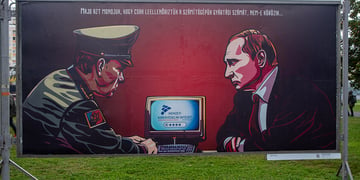

Apparently, the hackers were able to infiltrate the networks of Russia’s "No. 3" TV provider to “broadcast footage that revealed the country’s real battlefield and internal situation,” the source had told the newspaper.
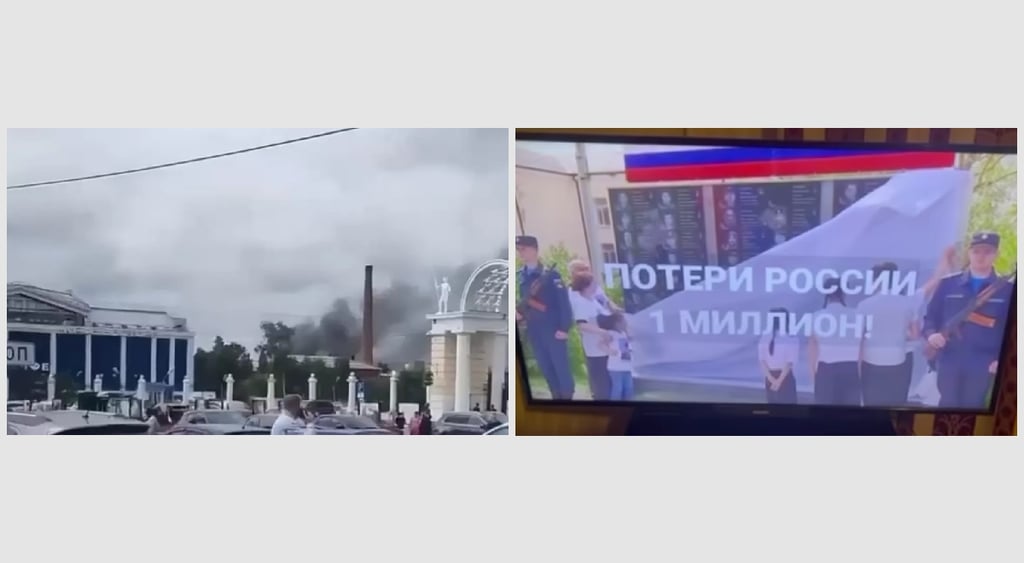
Airing for about three hours on 116 channels across at least 50,000 households, the "truth about war" footage was described to show “Russia’s fuel crisis, water shortages in occupied parts of Donetsk Oblast, Ukrainian strikes on oil refineries, and Russia's military losses.”
"Three and a half years into the war, and (Russian President Vladimir) Putin has not fully captured a single Ukrainian region. Ukraine remains independent," the video was reported to say.




The HUR source referred to the hackers as the "local cyber partisans," seemingly the same hacktivist group known as the Belarusian Cyber-Partisans.
Still, the group has not come forward to claim the attack on its website, Telegram channel, or X account, where the hacktivists regularly post updates on their activity.
The media outlet also said it could not confirm the source’s report, although several posts on X appear to have recorded some of the broadcast interruption.
⚡️There is no gasoline and there won't be any: on Ukraine's Independence Day, Russian TV viewers were shown the truth about the war
undefined ★ᚹᛁᚲᛁᚾᚷ★🏴☠️ (@vikingbooyah) August 25, 2025
According to sources at the Main Intelligence Directorate of the Ministry of Defense told RBC-Ukraine, local cyber partisans managed to undefinedhackundefined… pic.twitter.com/h9feNdwl22
Who are the Cyber-Partisans?
The “Belarusian Cyber-Partisans" is a self-proclaimed community of anonymous hacktivists hailing from Eastern Europe, and is a known colleague of the IT Army of Ukraine.
The group claims to be fighting "for the liberation of Belarus from the current president and dictator, Alexander Lukashenko, and the establishment of democratic rights and the rule of law in the country," according to its website.
Lukashenko – the only president of Belarus since 1994 – is considered a hated tyrant who has depended on Russian money and support to stay in office, allowing the Kremlin to use the nation as a launchpad in the war with Ukraine.
On July 29th, the Cyber-Partisans, along with fellow pro-Ukrainian hacktivist group Silent Crow, breached Russia’s national airline Aeroflot, causing massive disruptions and the cancellation of dozens of flights.
Besides taking control of Aeroflot’s systems, the groups claimed to have gained access to the passenger data of anyone who has ever flown with the airline.
Active since at least 2020, the Cyber-Partisans are no stranger to carrying out major attacks for its cause.
In May, the group breached Grodno Azot, a state-owned Belarusian fertilizer company known for evading sanctions, as well as the Belarus KGB in April, in which the hackers published a database of “40 thousand requests to the KGB from citizens of different countries in the period from September 2014 to August 2023.”
Other attacks claimed by the collective include: the Russian military communication network, the Belarusian government’s main news and radio sites, Belarus State University, Belarus Ministry of Internal Affairs, the Belarusian Railways (used to transport Russian occupation troops), and the Belarus prison cell wiretaps.