AI is here, but you still need juniors, say cybersecurity pros
The future of cybersecurity might be automated, and corporate teams are rushing to adopt AI tools. But are junior roles at risk of the chop?

Image by Cybernews

 Follow us
The future of cybersecurity might be automated, and corporate teams are rushing to adopt AI tools. But are junior roles at risk of the chop?
The AI wave is crashing hard into the cybersecurity world, and junior employees might be the first ones getting swept away.
A new global survey from ISC2, the world’s largest nonprofit association of certified cybersecurity pros, reveals cautious but growing interest in AI security tools among cybersecurity teams worldwide.
Organizations are embracing AI tools to level up security, but in doing so, they might be cutting the pipeline of future cyber talent.
AI has arrived, and it’s here to stay






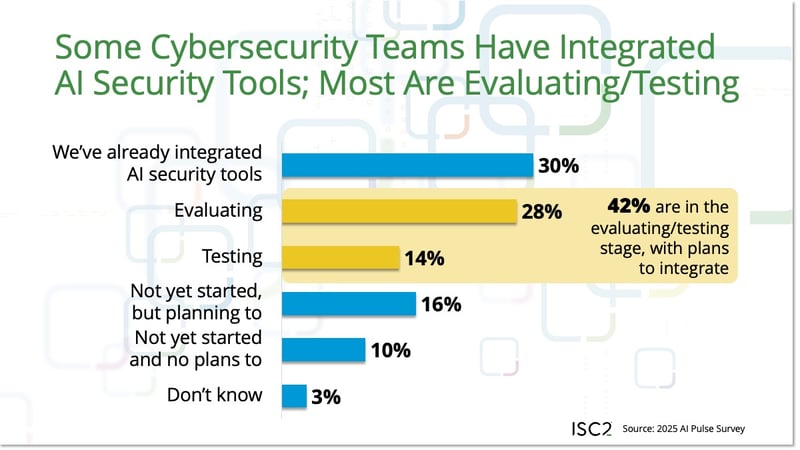
Nearly a third of the 436 security professionals surveyed said their teams have already integrated AI tools like generative models, automated response agents, or AI-enhanced monitoring systems into their day-to-day operations. Another 42% are either testing or evaluating them.
The biggest adopters are major corporations with 10,000+ employees and data-rich sectors like IT services and industrial firms. Meanwhile, public sector organizations are dragging their heels, with only 16% having taken the leap.
Industries leading the charge in adopting, testing, or evaluating AI tools for security include industrial enterprises (38%), IT services (36%), commercial/consumer sectors (36%), and professional services (34%). Meanwhile, financial services and the public sector lag behind with the lowest adoption rates, at just 21% and 16%, respectively.
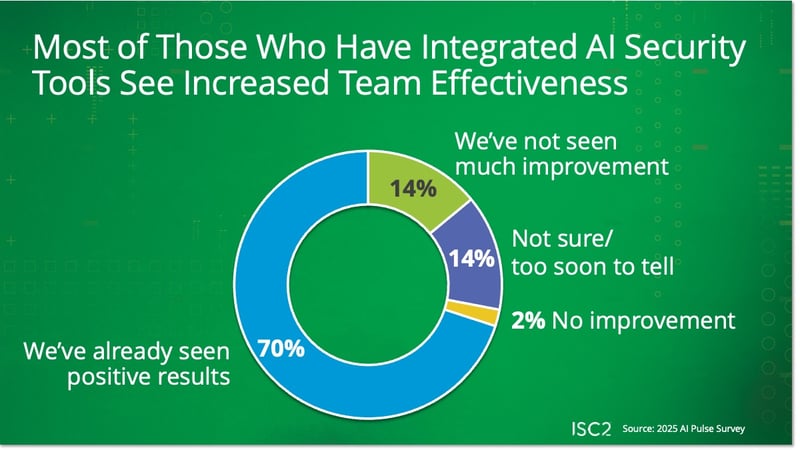
Speed and efficiency are driving a faster adoption. About 70% of those using AI in security roles say it’s already making their teams more effective, particularly in heavy-lift areas like intrusion detection, network monitoring, and vulnerability management.
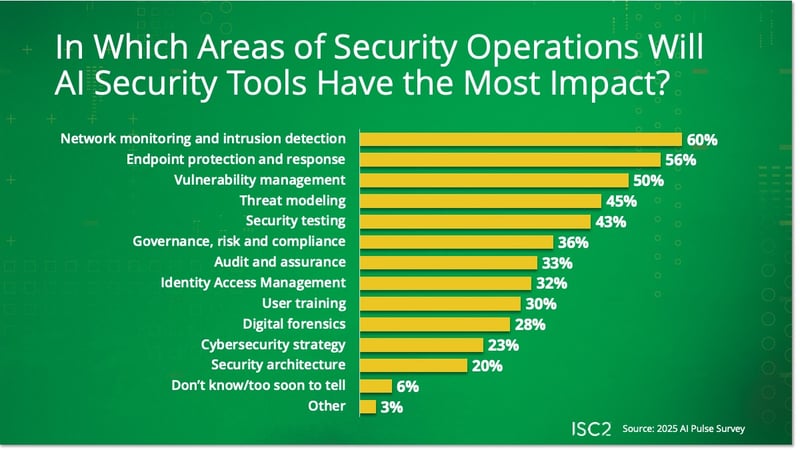
AI is being used to automate these fields of security work:
- Network monitoring and intrusion detection: 60%
- Endpoint protection and response: 56%
- Vulnerability management: 50%
- Threat modeling: 45%
- Security testing: 43%
AI tools might be a threat to junior positions
More than half of the survey’s respondents (52%) believe AI tools will reduce the need for entry-level hires. Twenty-one percent of respondents said that AI has already changed how their organizations hire and plan for cybersecurity roles.
However, such a trend might have long-term implications for cybersecurity professionals' skill set.
"You have to walk before you can run to be a truly efficient runner," one respondent told ISC2. And right now, AI is sprinting past the junior workforce before they’ve even laced up.
Security teams are facing a paradox: they want AI because it makes their jobs easier, but that ease could come at the cost of the long-term talent pipeline. Fewer junior hires means fewer future specialists, less mentorship, and fewer diverse entrants breaking into an already elite-heavy field.
“Reducing entry-level cybersecurity roles could lead to a significant skills gap, limiting talent growth and innovation,” warned one respondent.
“Long-term impacts include increased strain on senior professionals, slower response to threats, and higher costs due to competition for experienced talent.”
New AI-augmented job roles
Still, not everyone’s sounding the alarm. Almost half (44%) said their company’s cybersecurity hiring hasn’t been affected by using AI security tools yet.
A hopeful 31% of respondents believe AI could actually create new entry-level roles, ones that blend classic cyber knowledge with emerging AI skills.
According to ISC2, new and AI-augmented roles being advertised and discussed for entry-level cybersecurity professionals include:
- AI-Assisted SOC Analyst: working with AI-enhanced Security Information and Event Management (SIEM) or Security Orchestration, Automation and Response (SOAR) tools
- Security Data Analyst/Junior Threat Intelligence Analyst: focused on helping train and validate AI models by managing large datasets of threat indicators
- Automation and Security Orchestration Assistant: supporting the development and maintenance of security automation scripts and workflows that AI platforms use to take action
- AI Governance or Compliance Associate: entry-level support for ensuring AI systems used in security are operating in alignment with ethical and compliance expectations, as well as functioning properly more generally
- Security Testing Assistant: testing the robustness of AI-driven security tools, including evaluating their response to adversarial inputs
- Cloud Security Support Analyst: working with AI-enhanced cloud security monitoring tools to ensure the safety, availability, and defense of key cloud services and data repositories