China aims for domination in another key semiconductor material: undercutting the silicon supply chain
China, already a dominant player in rare earth mineral supply chains, has been heavily backing its domestic polysilicon industry, a critical material for semiconductor manufacturing. It is flooding the market with the substrate at below-fair prices, pushing companies out of business and positioning Chinese firms to dominate the global market, analysts warn.

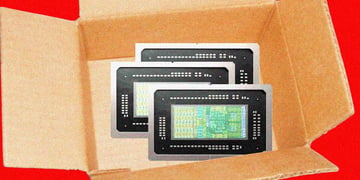
Image by Cybernews.

 Follow us
China, already a dominant player in rare earth mineral supply chains, has been heavily backing its domestic polysilicon industry, a critical material for semiconductor manufacturing. It is flooding the market with the substrate at below-fair prices, pushing companies out of business and positioning Chinese firms to dominate the global market, analysts warn.
The Information Technology and Innovation Foundation (ITIF), a non-profit think tank backed by major US tech companies, is warning about China’s “plans to dominate a key semiconductor material,” polycrystalline silicon. This high-purity form of silicon is used as an essential raw material to produce semiconductors, solar panels, and other key electronics.
ITIF says that the situation in the market is “threatening the financial viability of US and partner polysilicon firms.”
China already dominates solar-grade polysilicon, and its actions put the semiconductor-grade polysilicon at a transition point.





“The US National Renewable Energy Laboratory has estimated the fair market price for polysilicon to be $24/kg. Chinese firms are selling at approximately $5/kg, about $1 below their production cost,” the report by Alex Rubing, a visiting fellow at the Hoover Institution’s Tech Policy Accelerator, explains.
Chinese firms are able to produce and sell polysilicon below their production costs due to Beijing’s significant financial support.
ITIF argues that Chinese firms sell silicon and derivative materials at below market value and at a loss in exchange for increasing their market share.
“Beijing’s support for its firms includes financial subsidies and incentives, infrastructure and land support, and strategic national plans,” the report reads.
Unanswered, these actions are undermining the financial viability of leading firms in the US and allied countries, and ITIF urges the government to respond.
“The administration should prohibit imports of Chinese-origin or -linked polysilicon or derivative products, and require products containing Chinese-origin or -linked polysilicon to document that no forced labor was used in their production.”
ITIF also calls the departments of Commerce, War (Defense), and Treasury to support US-based polysilicon and silicon-carbide producers.
Why is polysilicon so important?
Nearly every semiconductor fab (fabrication facility) uses wafers and polysilicon as the main substrate to manufacture them.
It is one of the purest materials on Earth – 99.9999999999 percent pure (12N) polysilicon is used for chip production, and less pure (9N) polysilicon is required to produce solar panels. Solar-grade polysilicon accounts for at least 95 percent of the global market. However, companies produce both grades of the products to remain profitable.

“Without a steady supply of polysilicon, companies would not have wafers upon which they could ‘print’ chips. Additionally, the US defense industry relies on polysilicon for critical defense applications, including sensors, radars, and high-voltage electrical systems used in fighter jets, tanks, and drones,” ITIF explains.
The production of polysilicon and ultimately wafers contains “many unique chokepoints.”
It’s produced from quartz, which contains about 98-99% silicon dioxide.
“A more specialized form of quartz – high-purity quartz – is used in the refining process for polysilicon and is heavily concentrated in a mine in Spruce Pine, North Carolina.”
After quartz is mined, it is processed into silicon metal by removing oxygen, reaching 98-99.5% purity. This metal already has many uses, from aluminum production to silicones such as lubricants, sealants, and adhesives, and as an intermediate component in the chemical industry.




To get polysilicon, silicon metal is further refined. Chinese companies dominate polysilicon production.
Meanwhile, the global wafer fabrication market is heavily concentrated in Germany, Japan, South Korea, and Taiwan, with only a nascent production capacity in the US.
Why are China’s actions concerning?
The overcapacity in China’s polysilicon industry has driven prices down, below even the local firms’ production costs. To address that, China’s leading polysilicon producers are in talks to create a $7 billion fund to acquire and shut down roughly one-third of production capacity.
“If successful, this would create an OPEC-like consortium able to set the global price for solar-grade polysilicon at levels profitable for Chinese firms but prohibitively low for US and partner firms,” ITIF explains.
Even in China, the firms reported a loss of $40 billion in 2024, and over the last few months, various market leaders have announced closures or postponed expansion plans due to unfavorable market dynamics.
“Wolfspeed, the leading US silicon carbide producer, closed two US fabrication facilities and postponed expansion at its Germany fab in 2024. In June, the firm filed for bankruptcy,” the report reads.
“REC Silicon, a US-based, Norway-listed producer, halted its polysilicon production in the US because of low prices, closing facilities in Montana and Washington.”
ITIF warns that the US might find itself reliant on Chinese companies for a key critical upstream input.