The Military-industrial tech complex: GPUs matter more than jets
In the modern-day battlefield, advantage depends less on jets and more on GPUs, less on steel and more on software licenses, less on forward bases and more on cloud regions near undersea cables. Over the past decade, big tech has moved from the periphery of defense to its center. The tools of war now include mobile stacks, satellite links, and model governance checklists.
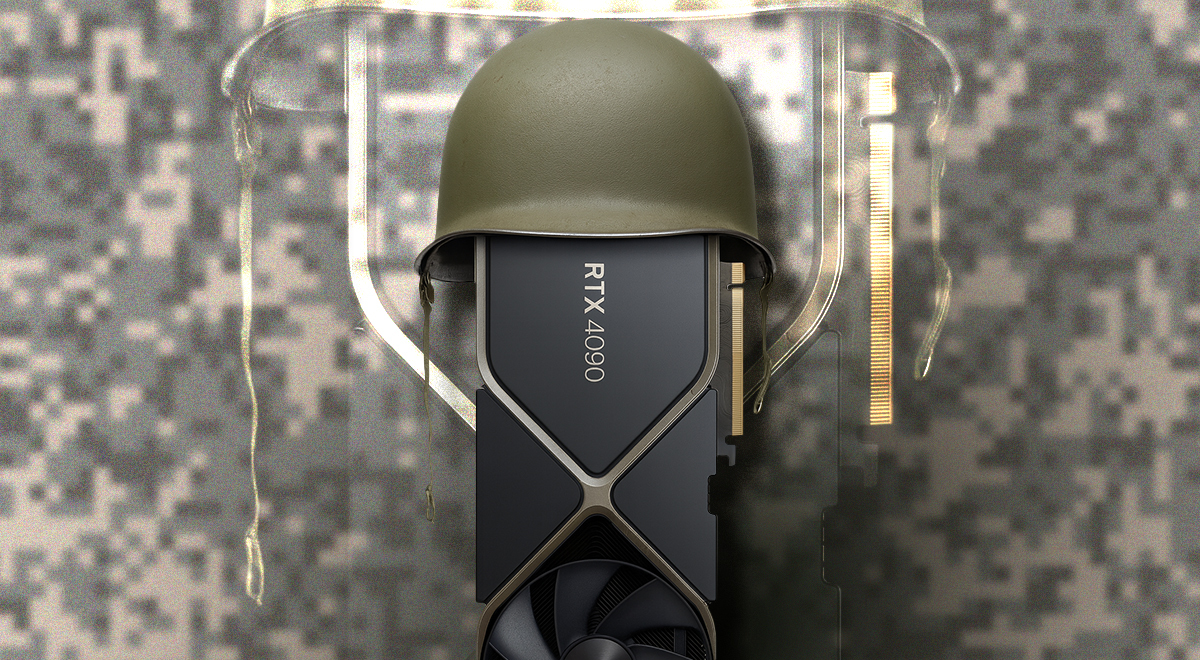
Image by Cybernews.

 Follow us
In the modern-day battlefield, advantage depends less on jets and more on GPUs, less on steel and more on software licenses, less on forward bases and more on cloud regions near undersea cables. Over the past decade, big tech has moved from the periphery of defense to its center. The tools of war now include mobile stacks, satellite links, and model governance checklists.
Rugged phones from Samsung run frontline apps. IBM is integrating trusted data with modern AI stacks for informed decision-making. Amazon, Microsoft, Google, and Oracle are the backbone of military computing through multicloud deals that touch everything from logistics to ISR workflows.
At the same time, limits and pushback are surfacing. Microsoft’s recent move to cut off a subset of cloud and AI services used by an Israeli defense unit signals a line in the sand. The marriage between Silicon Valley and the security state is still being defined, and the next twelve months could shape that definition.
The Microsoft precedent
On 25th September 2025, Microsoft said it had disabled certain subscriptions for a unit within Israel’s Ministry of Defence after an internal review tied its technology to civilian mass surveillance. Brad Smith informed staff that the use had violated standard terms and that an internal review would continue. Other cooperation with Israel would remain in place.






The decision followed investigative reporting that described a trove of intercepted calls stored at scale in European cloud regions. Microsoft did not access customer content during its review, but stated that other evidence supported elements of the reporting. The company then notified the ministry and shut down specific cloud storage and AI services.
The significance runs beyond a single customer. For a decade, the trend line pointed toward more services, more regions, more classified accreditations. We now have a platform that enforces boundaries on a live government account. That sets expectations for audits, clauses, and automated policy enforcement across the industry.
From Pentagon buyer to multicloud partner
The US Department of Defense’s pivot from the JEDI project to the Joint Warfighter Cloud Capability changed the game. Rather than pick one winner, the Pentagon split work across AWS, Azure, Google Cloud, Palantir, and Oracle. That puts accredited services at all classification levels within reach of mission owners from headquarters to the tactical edge.
The impact extends beyond storage and compute. JWCC is the fabric where AI models, sensor feeds, and command applications meet. Program offices can place task orders that bundle networking, zero-trust patterns, data pipelines, and edge hardware in one motion.
Financially, the footprint of the platform providers in defense has deepened. Public totals show double-digit billions in awards to Microsoft, Amazon, and Alphabet in recent years, even before classified work. Venture capital has flowed into startups that orbit these clouds, creating a large ecosystem that plugs into the same pipelines.
Tactical glass, hardened phones, and frontline apps
At the edge, ambitions and pragmatism meet. The Army’s IVAS program, built on the HoloLens lineage, has had its rough patches, but the direction is clear. Synthetic overlays, targeting aids, and shared situational awareness are migrating directly into a soldier’s field of view.






Meanwhile, Samsung’s Tactical Edition approach has become part of daily practice without fanfare. Galaxy handsets and tablets are hardened to government standards, running ATAK, drone feeds, and secure communications. Features like night-vision compatibility and quiet modes enable consumer silicon to operate effectively under field constraints.
The bigger story is that a properly secured commercial mobile ecosystem now carries a large share of frontline software. Updates arrive faster, app ecosystems grow organically, and procurement taps into broader supply chains. Reliability and battery life matter as much as any flashy capability.
IBM’s defense AI is about decision advantage, not headlines
IBM’s posture in defense is methodical. Rather than hype weapons, it focuses on data plumbing, governance, and traceable answers for analysts and planners. That starts with retrieval over trusted sources, model selection, and a pathway to explain how a recommendation was formed.
A recent collaboration with Janes shows the pattern. Defense-grade data sources, retrieval-augmented generation, and guardrails produce faster, checkable outputs for mission planning, logistics, and threat analysis. The deliverable is a decision advantage rooted in sources that can be audited and verified.
This work is unglamorous but decisive. The winning systems are not the loudest demos. They are the ones that align with evidence, survive red-team testing, and pass operator sniff tests under time pressure.
The dual-use engine
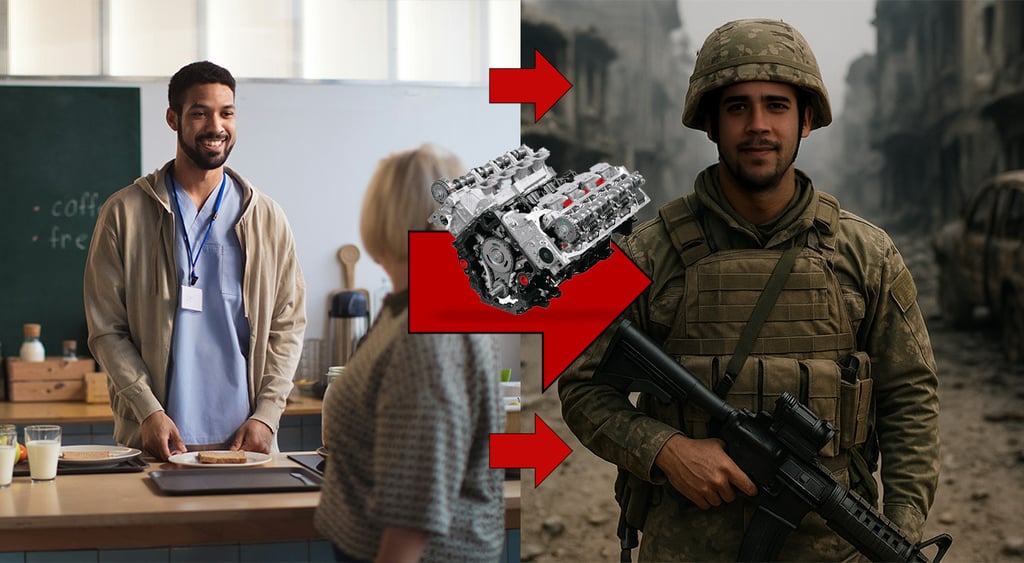
Dual-use now runs primarily from civilian to military. Hyperscale clouds ship enclave patterns across unclassified, secret, and top secret domains. Consumer GPUs and AI stacks become battle simulation engines and target triage tools. Commercial satellite constellations provide connectivity in contested theaters. That flow brings speed.
Civilian iteration cycles deliver features every few weeks, not every few years. It also imports fragility, because civilian supply chains are tuned for cost and velocity rather than wartime resilience.
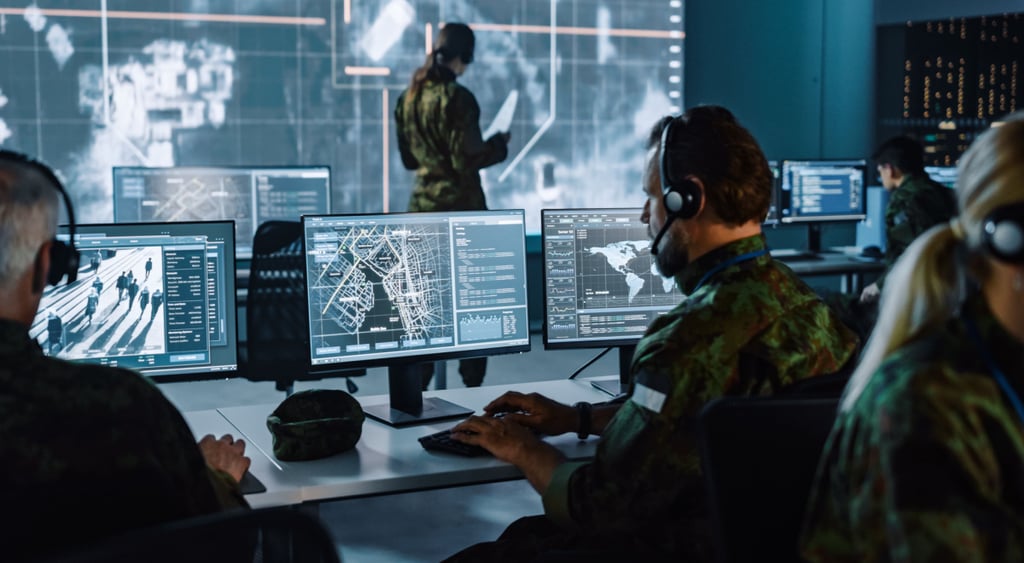
There is also a governance wrinkle. A private company can shape communications policy in a live conflict zone through service terms and access decisions. Defense planners now must consider corporate policy and workforce sentiment as variables in operational risk models.
The arms-race story versus the reality on the ground
A loud narrative frames AI as a decisive offset. Investor decks and conference keynotes promise autonomy, perfect fusion, and near-instant targeting. Procurement incentives can reward significant claims and proprietary stacks that appear promising in a lab.
Field reports paint a different picture. In Gaza and Ukraine, AI has accelerated intelligence processing and shortened targeting cycles, but it has not fundamentally altered the nature of war. Deception, denial, and dirty data still cause misses, and contested spectrum still breaks neat plans.
The danger is drift. Programs can slide toward brittle, vendor-locked services validated under ideal conditions. The better path focuses on open interfaces, red-team realism, operator feedback, and model governance, assuming adversaries will attack the data, the model, and the human loop.

Cloud leverage and political risk
Strategic dependency cuts both ways. Militaries gain elasticity, speed, and reach. Cloud providers gain leverage and reputational exposure. Multicloud designs, such as JWCC, add options, but portability only matters if data models and deployment patterns truly travel.
The Microsoft-Israel episode adds a new dimension. Corporate policies, legal counsel, and internal activism can alter service availability during sensitive operations. That is no longer a theoretical risk.
Defense buyers should assume that “terms of use” and “acceptable use” enforcement may trigger automated actions. Contracts, monitoring, and exit plans must reflect this reality. The goal is to prevent heroics during a cutover when mission stakes are highest.
Employee voice now shapes defense work. Google’s exit from Project Maven followed staff pushback. Protests at Google and Amazon over Project Nimbus led to firings. Microsoft has faced internal dissent over work tied to conflicts.
This is a long-term talent issue, not just a news cycle. AI and security engineering talent is scarce, and many want clarity about where their work shows up in the world. Firms that want to grow in defense need transparent review boards, enforceable red lines, and ways for employees to opt out without torpedoing programs.
Militaries also have homework. They need more in-house talent, more vendors, and more open interfaces. A single company culture should not become a single point of failure for national capability.

Meanwhile, Europe sits in a bind. Its cloud and semiconductor gaps leave ministries and militaries reliant on external platforms, even as Brussels tightens rules around data and AI. The continent wants trusted options without losing time or capability.
A pragmatic path is to accredit more sovereign and near-sovereign environments that interoperate with allied platforms. Shared schemas, standard controls, and tested portability can reduce exposure without breaking coalitions.
The risk is strategic drift. If the compute, data, and know-how live elsewhere, policy tools lose bite. Europe needs to build sufficient capability at home while maintaining connections to existing, operational allied ecosystems.
Risks we cannot ignore
Models break in adversarial settings. Dirty inputs, spoofing, and degrading signals cause silent failures. Without monitoring and counter-deception, confidence can outrun reality in ways that are hard to detect until it is too late.

Global supply chains remain fragile. From chips to optics to fiber transits, disruptions can cascade across programs. Stockpiles, second sources, and sovereign capacity are not nice-to-haves. They are part of mission assurance.
There is also a democratic risk. General-purpose clouds can be repurposed for large-scale dragnet collection. Without enforceable guardrails and auditability, surveillance creep becomes a default setting. That corrodes trust at home and abroad.
Have thoughts about this topic? Others do, too. Join them in the discussion.
Accountability must be baked into design and contracts. Buyers should require provider-enforced guardrails with automated detection and kill switches for prohibited use. Escrowed logs should allow independent review when credible allegations arise while protecting legitimate secrets.
Providers should publish human-rights impact assessments for sensitive regions and link them to actual enforcement playbooks. Internal ethics escalations must move faster than headlines and include absolute authority to pause or modify services as needed.
Both sides should back open standards for data, model lineage, and deployment. Portability is not a talking point. It is the insurance policy when a red line is crossed or when a provider says no.
When big tech becomes national security infrastructure
It is easy to frame every breakthrough as decisive and every setback as fatal. Reality sits in the middle. The Military-Industrial Tech Complex represents a structural shift in how nations generate capability, not a conspiracy or a fad.
Its benefits are tangible when grounded in data discipline, testing, and operator trust. Its dangers are tangible when speed and secrecy outrun oversight. Leaders must establish a balance that allows commercial speed and public accountability to coexist.
That means treating clouds as regulated infrastructure when they support combat operations. It means choosing open architectures over convenience. It means aligning AI deployments with rules of engagement and international law, not just platform policies.

Samsung’s hardened devices demonstrate how commodity technology, when properly secured, can now carry frontline software. IBM’s defense AI work shows that value lies in traceable, source-grounded answers. JWCC indicates that the Pentagon wants choice and reach across classification levels.
Microsoft’s cut-off shows that policy enforcement can disrupt a mission in the middle. That is a design constraint for everyone. It should shape architectures, contracts, and training.
The problem is that what begins at the tactical edge rarely stays there. History shows that tools built for foreign conflicts often migrate into domestic life, reshaping how citizens experience power and privacy.
Larry Ellison captured this trajectory bluntly when he told investors, “Citizens will be on their best behavior because we are constantly recording and reporting everything that’s going on.”
Oracle now plays an increasingly significant role in social media and AI-enabled analytics, blurring the boundaries between national security infrastructure and the spaces where we converse, trade, and share. The challenge here is to ensure that the systems that produce advancements in how we manage soldiers and adversaries do not turn inward, with the consequence of normalizing surveillance in our everyday lives.
Leaders now face a final test in whether they can harness the speed of commercial technology for defense while drawing clear boundaries that protect civilian life from becoming a continuous battlefield.
Unlock more exclusive Cybernews content on YouTube.