Scammers abusing WhatsApp group invites: platform blocks 6.8 million accounts
Meta is fighting massive scam centers in Southeast Asia that are running multiple fraud campaigns at once. The tech giant said it has detected and banned over 6.8 million WhatsApp accounts and is launching new security features on the platform.

Image by Cybernews.

 Follow us
Meta is fighting massive scam centers in Southeast Asia that are running multiple fraud campaigns at once. The tech giant said it has detected and banned over 6.8 million WhatsApp accounts and is launching new security features on the platform.
WhatsApp, by default, lets anyone invite other users to groups unless they change their privacy settings. This feature is often abused by cybercriminals running crypto investment frauds, pyramid schemes, and other scams.
All the hackers need to add users to a group are phone numbers, which are constantly exposed in data leaks or sold on dark web marketplaces.
“WhatsApp has always allowed anyone with your phone number to message you or add you to a group. Just like how anyone can send you an SMS message or email if they have your contact information. By default, your group privacy settings are set to Everyone,” the support page reads.






That will not change, but users will now receive an alert when they’re added to a group by an unknown contact.
“We’re launching a new safety overview that we’ll show you when someone who’s not in your contacts adds you to a new WhatsApp group you may not recognize. It will include key information about the group and tips to stay safe,” Meta said.
This alert will provide users with an option to either exit the group without ever having to look at the chat or to see the chat for more context.
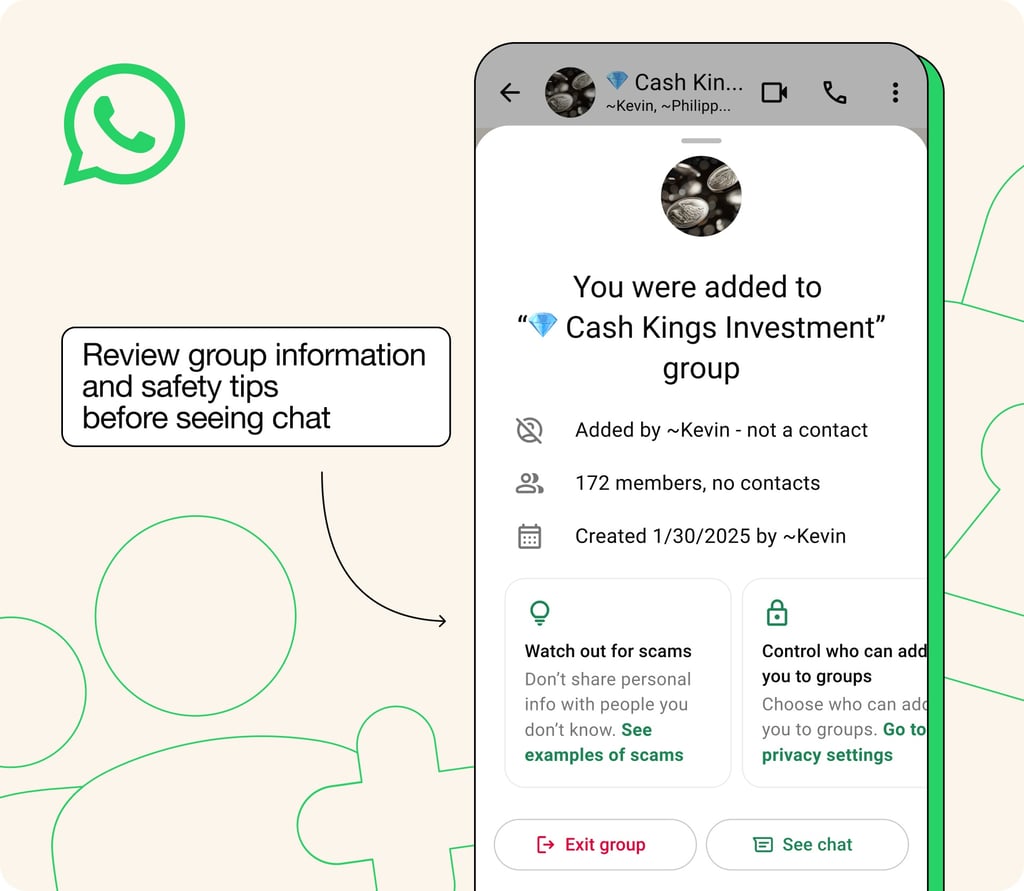
“Regardless, notifications from the group will be silenced until you mark that you want to stay,” Meta said.
The tech giant also recognizes that scammers attempt to initiate first contact directly via individual messages. WhatsApp is testing new approaches to raising awareness before engaging with unwanted message senders.
“We’re exploring ways to caution you when you start a chat with someone not in your contacts by showing you additional context about who you’re messaging so you can make an informed decision,” the post reads.
In the first half of the year, WhatsApp has banned over 6.8 million accounts linked to scam centers. Many of the accounts were detected and removed before fraudsters had a chance to use them for malicious purposes. The messaging app has nearly three billion monthly active users.




According to Meta, WhatsApp and OpenAI jointly disrupted scam operations from Cambodia. The scammers used ChatGPT to write initial messages, direct people to WhatsApp chat, and then move them to Telegram, where they were tasked with liking videos on TikTok to earn money.
However, the earnings were fake, and hackers ultimately asked victims to deposit money into a crypto account.
“These attempts ranged from offering payments for fake likes to enlisting others into a rent-a-scooter pyramid scheme, or luring people to invest in cryptocurrency.”
If you don’t want to receive invites to groups from unknown individuals, change WhatsApp group privacy settings: go to Settings, click privacy, then select Groups. Here you can select “My Contacts” or other options.