Who profits from UFO/UAP hype? Inside the attention economy that drives alien fever
As online debate has become more about flaming the opposition than ever before, pouncing on the individual themselves can be more significant than the fact that they saw a flying saucer in the sky.

Image by Cybernews

 Follow us
As online debate has become more about flaming the opposition than ever before, pouncing on the individual themselves can be more significant than the fact that they saw a flying saucer in the sky.
A cannonade of comments, though, may not be the worst thing, as when a UFO sighting gains online traction, it moves to the top of social media and gets more attention.
Devoted outlets like MUFON (exclusive to UFOs), The War Zone (primarily for military and defense), and The Galileo Project (scientific research) back up the cause with content.
And as for the sharer, the focus needn’t be on whether they believe you or not, but how to capitalize on their content, like other influencers and social media figures.
We sounded out Barna Donovan, a professor of communications and media culture at Saint Peter’s University in New Jersey, to get his two cents on the topic.






Firstly, like any other market, the algorithm feeds the hunger. As Donovan points out, the idea is to “produce as much content as possible” to feed the attention market.

But Donovan sees a conundrum.
“Along with the appetite for stories of possible alien contact comes a wariness over online hoaxes and misinformation,” he said.
For the mainstream news consumer, UFO stories remain a weird niche and would have to be aired on primetime by the big players to warrant their attention.
Those trying to decide which claims of alien content are believable will tend to take stories more seriously if they are also given attention by mainstream media outlets. A UFO story featured on CNN or Fox or any of the broadcast networks will carry more weight with viewers.Donovan shed light on the matter.
For more vertical discussions into sightings, coverups, and whistleblower accounts, there’s a whole treasure trove of content available.
The Why Files, for example, with over five million subscribers, follows its own unique trajectory to grant license to the viewer to make their own mind up.
“The usual format of each show begins with an overview of an alleged paranormal phenomenon, but then midway through the show, Gentile adds his signature line, ‘But is any of this true?’” Donovan explains.
When whistleblowers themselves feel a sense of disclosure fatigue, it can be down to channels like The Why Files or Jeremy Corbell's Weaponized podcast. These podcasts have featured prominent whistleblowers like David Grusch and Matthew Brown, whose immaculate constellation document revealed the Pentagon's secret UFO program.
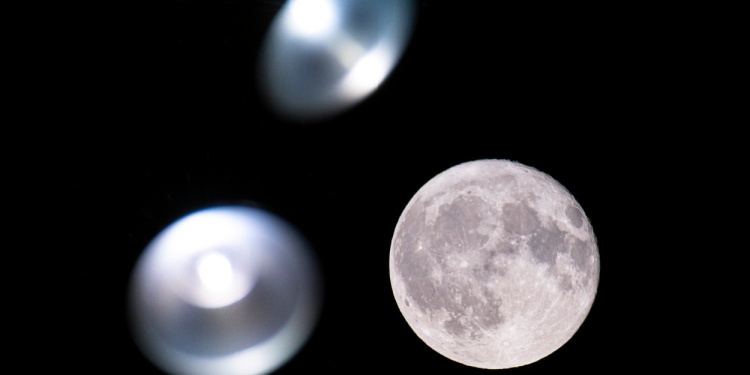
Audience members who are rewarded are those who exhibit a kind of interactive skepticism and do not get too bogged down in a tangent on a Reddit thread.
For Donovan, UFO coverage now blurs genres.
“Journalists doing stories about claims of alien contact will, up to a point, be entertainers, or perhaps infotainers, aware of the popularity of UFO stories.”
After all, they might be writing for a True Crime audience, who appreciate their stories a bit noir.
On The Proof Is Out There, for example, UFOs are a cornerstone topic alongside other paranormal ones. Popular episodes include jellyfish UFO sightings and spaceships almost colliding with planes at airports. The show has also pointed out hoaxes, too, by using scientists and special effects experts.
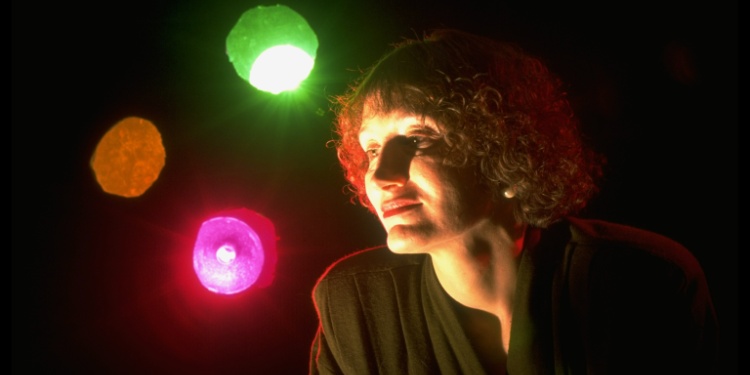
The strategy seems to be to straddle science-heavy explainers and mystical ingredients so curiosity can be satisfied, especially when those in office aren’t giving the game away. Call it half enquiry, half showmanship.
In truth, only a flying saucer landing on the White House lawn or a gigantic mothership hovering over a major city for all to see will constitute incontrovertible proof......Donovan explained.
Credibility can be lost, and trust bottoms out with the circulation of fake content, as was the case in 2023 with Reddit's beloved r/UFO subreddit. VFX artists created two elaborate videos, later named “the Reddit UFO” and “Tesla UFO,” with the latter so meticulous that it had many fooled.
Still, the belief economy endures, and witness recognition seems poised for a bigger breakout.
“The truth about aliens is still out there,” Donovan says, “and the work of fraudsters or sloppy journalists won’t deter true believers.” Most often, it isn’t what you say, but how you say it.






Unlock more exclusive Cybernews content on YouTube.