Will doom scrolling give you that warm fuzzy feeling when it’s gone?
Doom scrolling and algorithms plague our screens, and many complain about the negative implications of both. But will we yearn for them once they’re gone?
Image by Cybernews

 Follow us
Doom scrolling and algorithms plague our screens, and many complain about the negative implications of both. But will we yearn for them once they’re gone?
I was scrolling through Reddit, as one does, when I came across an interesting post on r/Futurology.
“Will future generations ever feel nostalgic about our era of endless scrolling and algorithm-driven feeds?” user Adventurous-Might808 pondered.
This question really got me thinking about the current era of the internet we’re immersed in and how it might look to people in the future.
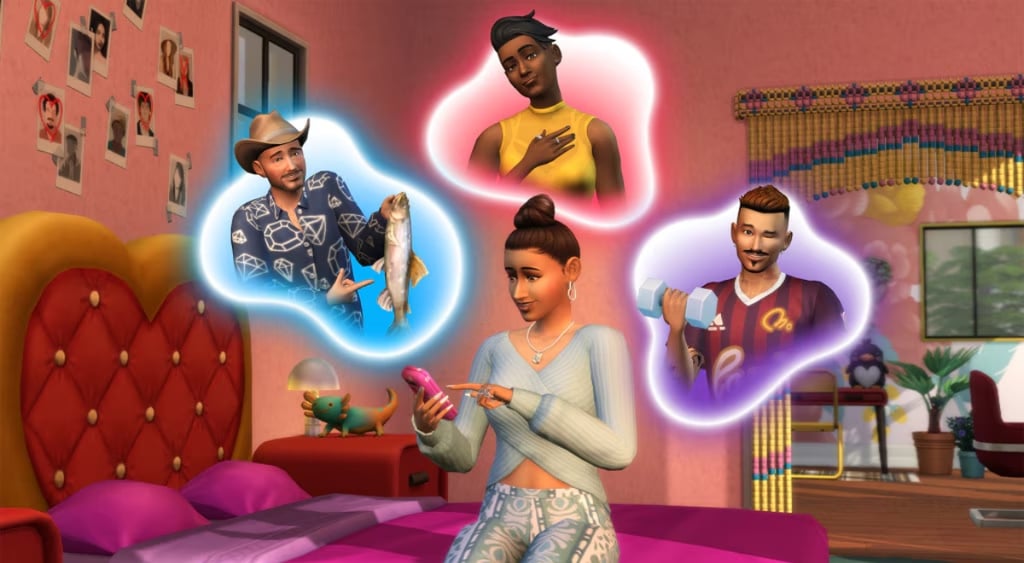
I often reminisce about the times when I was forced to play The Sims on our family laptop because we didn’t have internet access or my first phone (a Siemens flip phone with a rose imprinted on the front).




I think fondly of the times when I didn’t have access to everything, when the internet wasn’t such a confusing and, quite frankly, scary place.
Young people growing up in our current chronically online generation have it hard.
With all this conflicting information at their fingertips and the emergence of artificial intelligence (AI), it makes you think whether something more insidious is on the horizon, and whether we will one day romanticize this era of the internet, where things weren’t so complicated.
If we think back far enough, we can surely remember obsolete tech and defunct social media platforms that we once loved.

Take Vine, for example. This six-second, short-form video site is a platform that ushers in a tinge of nostalgia in all who have used it, evidenced by the 40-minute-long Vine compilation videos that have found a home on YouTube.
However, that era came to a close, and now people fondly look back on their experience creating and watching their favourite creators on the platform.
But I want to answer, or at least attempt to answer, Adventurous-Might808’s question. Will we look back on this brain-rotting, doom-scrolling, algorithmic insanity with enthusiasm?
Nostalgia comes in the form of dial-up internet and corded phones
Greg Swan of the marketing agency FINN Partners seems to believe that every generation etches its own “digital folklore” into the cave walls of history.
He told Cybernews of the “warm fuzzies” he gets when remembering the dial-up modem, the “You’ve Got Mail” notification, and, perhaps most importantly, MySpace, which became its own cultural moment back in the 2000s.
If Swan is looking back on those moments through rose-tinted glasses, it's likely that TikTok’s “For You” page and Snapchat stories or Snapchat streaks will elicit “bittersweet nostalgia,” he told Cybernews.

Similarly, Dr Julie Ferris-Tillman, Vice President and tech practice lead at the public and media relations firm Interdependence, has “fond memories of (her) wall-mounted telephone with the long, impossibly tangled curly cord” that allowed her to pace back and forth while “talking about absolutely nothing” with old friends.
Dr. Ferris-Tillman still remembers curling the cord around her fingers while she talked. While she acknowledges that the corded telephone “wasn’t an ideal situation” and it “wasn’t the best version of that technology,” it still occupies a space in her mind.
This is because obsolete tech and old social media platforms transport us to a sentimental place buried in the past.
We cannot have fond memories of old tech if we don’t have emotional associations with it.
Nostalgia over tech can’t exist in isolation
Dr. Ferris-Tillman told Cybernews that our yearning for tech of the past comes with its context and cannot be divorced from it.
“It’s important to note, however, that we don’t have memories of a tech or platform in isolation. They’re connected to a time in your life as well.”
Doom-scrolling may take you back to tired nights after an internship, or certain TikTok trends might be emblematic of a period in your life.
Swan echoed this notion, saying that nostalgia isn’t necessarily about the quality of the tech but the emotional experience that encompasses it.
However, Dr Ferris-Tillman emphasized how “none of these things exist out of context, and that’s why they will gain a nostalgic sparkle for us in the future.”
“We’re remembering our lives at that time as much or more than we are remembering cumbersome platforms.”
We’re already romanticizing tech and its trends
We all remember 2020. During the height of the pandemic, it was lonely, isolating, and downright depressing at times.
But without technology, it would’ve been impossible to connect with friends and family at all.
While 2020 was only five years ago, we’re already nostalgic about the technology that brought so many of us together.
As Swan told Cybernews, the technology we used during this major world event shaped our collective memory, the very thing that nostalgia is born from.
With the rate at which TikTok trends are churned out, we’re arguably nostalgic over trends that happened a few months back.
Does anyone remember the eruption of discourse surrounding 100 men vs one gorilla? Or German and Italian brain-rot?
Although those trends come and go in a flash, they’ll always stay in our collective memory if they resonate with us enough.
“Will future generations ever feel nostalgic about our era of endless scrolling and algorithm-driven feeds?”
In an attempt to answer Adventurous-Might808’s question, I find myself at a crossroads.
While there’s much tech that I don’t remember, there’s much tech that does capture the cultural zeitgeist.
It’s likely that certain social media platforms and popular tech like OpenAI’s ChatGPT will live our memories long after they’re gone. But only if they cease to exist.
“I imagine future digital citizens might look back at algorithmic manipulation the way we view the food pyramid: how did we let that happen?” said Swan.
While nostalgia is inevitable with the passage of time, Swan posits the question, “What story do we want it to tell?”