Denmark wants to ban social media for kids under 15: How would it work?
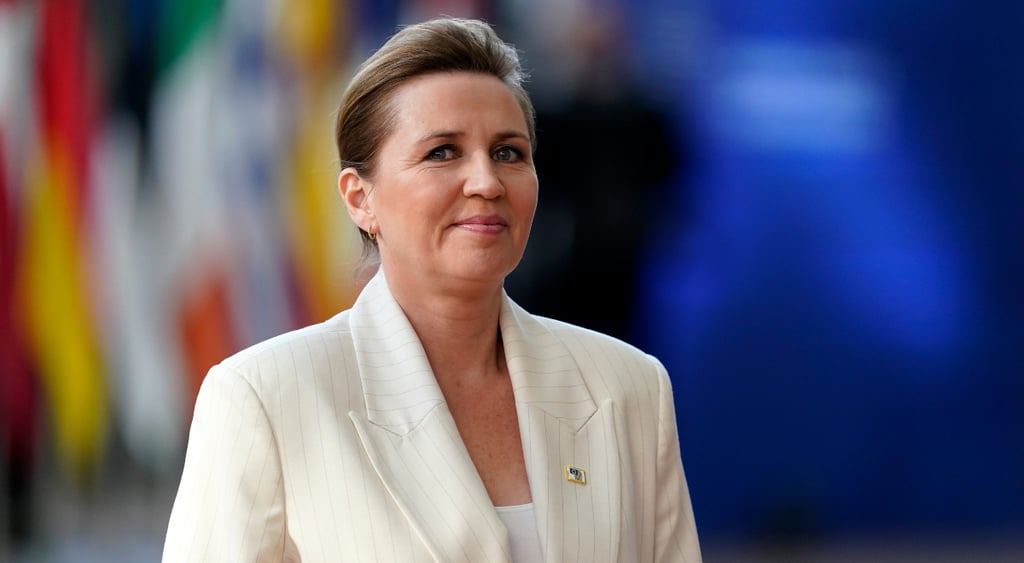
“We have unleashed a monster,” Danish Prime Minister Mette Frederiksen told the country’s lawmakers after announcing an intention to ban several social media platforms for children under the age of 15. Critics say the idea will undoubtedly be difficult to enforce.

Image by Cybernews.

 Follow us
“We have unleashed a monster,” Danish Prime Minister Mette Frederiksen told the country’s lawmakers after announcing an intention to ban several social media platforms for children under the age of 15. Critics say the idea will undoubtedly be difficult to enforce.
Frederiksen said that mobile phones and social networks were “stealing our children’s childhood.” During her speech, she also cited data showing that never before have so many children and young people suffered from anxiety and depression.
According to the prime minister, many children also have difficulty reading and concentrating. She added, "On screens, they see things no child or young person should see.”
Countries rallying to the cause
It’s unclear which social networks the new measures would affect. A 2024 Danish citizen's initiative, which gathered 50,000 signatures, called for a ban on TikTok, Snapchat, and Instagram.





Denmark is not the first EU member state to initiate measures to protect children online.
In fact, French President Emmanuel Macron announced in June his intention to ban social media for under-15s “in the coming months” if no progress was made at the EU level on this matter.
Since then, the French Delegate Minister for AI and Digital Affairs, Clara Chappaz, has been on a crusade to rally other member states to the cause.
Cyprus, Denmark, Greece, Italy, Slovenia, and Spain soon joined forces to support the idea of EU-wide age check mechanisms, and Denmark took over the six-month rotating EU presidency in July.
Norway has also said it would enforce a strict minimum age limit of 15 on social media. The country’s prime minister, Jonas Gahr Støre, cited the need to protect children from the “power of the algorithms.”
A bill on an age limit doesn’t appear in the government’s legislative program for the upcoming parliamentary year.
There are a few issues, however. Frederiksen didn’t specify what such a ban would entail. Moreover, a bill on an age limit doesn’t appear in the government’s legislative program for the upcoming parliamentary year.
No robust age verification
And that might signify the actual problem: the only way to enforce strict age limits on social media use is to require the platforms to verify users’ age online, and these efforts haven’t been successful at all.
Frederiksen herself said that 94% of Danish seventh-grade children had a social media profile before they were 13.
According to Jessica Galissaire, a platform regulation expert at the European tech policy think tank interface, the EU already has comprehensive age assurance requirements across the GDPR, AVMSD (Audiovisual Media Services Directive), and DSA (Digital Services Act).






But, Galissaire said, platforms are simply ignoring them, and any social media ban would just be a Band-Aid that might end up backfiring.
“We already have age assurance in the EU. Why would it be different this time? Why would the platforms comply all of a sudden? And if they don't comply, why would authorities all of a sudden go after them and tell them what to do?” Galissaire told Cybernews.
The expert recently tested all the most popular platforms among minors in the EU: Discord, Fortnite, Instagram, Roblox, Snapchat, TikTok, Twitch, and YouTube. The results were unambiguous: all of them rely on self-declaration mechanisms for age checks when an account is created.
“If you cannot access the platform when you are 15, what happens when you are 16? Are you all of a sudden equipped with the critical thinking that's required to be safe in these spaces?”Jessica Galissaire.
None have implemented robust age assurance, and where parental consent tools do exist (notably on YouTube and Fortnite), they can either be easily bypassed or they are applied only after the account has already been created.
It’s a conundrum, in short. According to Galissaire, age verification alone doesn’t solve anything: it only delays the problem.
“If you cannot access the platform when you are 15, what happens when you are 16? Are you all of a sudden equipped with the critical thinking that's required to be safe in these spaces?” she asked.
“It also doesn't prevent adults from contacting kids between 15 and 18, and creates no safe spaces for them to communicate or socialize with each other. The tech platforms are the number one responsible actors here.”
Unlock more exclusive Cybernews content on YouTube.