DHS was silently collecting DNA from Americans under the Biden Administration
The Department of Homeland Security (DHS) has been sneakily building a “massive” and “unconstitutional” database of American citizens' DNA.

Image by Cybernews.

 Follow us
The Department of Homeland Security (DHS) has been sneakily building a “massive” and “unconstitutional” database of American citizens' DNA.
Federal agencies in the US have been quietly harvesting DNA from people for years, according to new government data analyzed by Georgetown Law’s Center on Privacy and Technology.
The 2024 report, “Raiding the Genome,” shows the scope, depth, and breadth of this activity and highlights fundamental concerns surrounding data collection and privacy.
Under the Biden Administration, the DHS harvested DNA data from roughly 2,000 US citizens for at least four years (2020 to 2024).
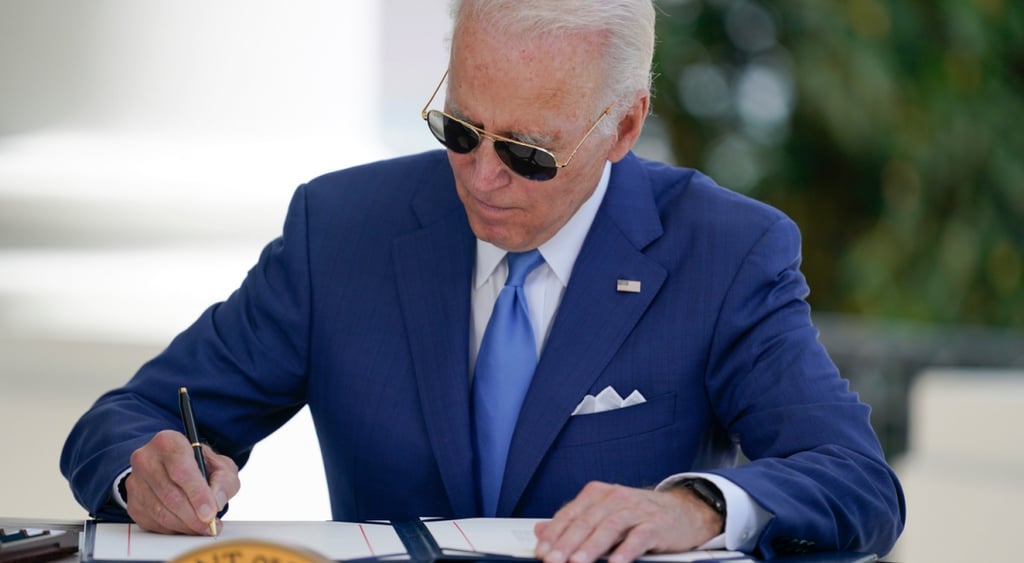






The Customs and Border Protection (CBP) agency sent the DNA to the FBI, identifying the data as belonging to US citizens. Alarmingly, 95 of the 2,000 samples came from children.
CBP agents’ reasoning behind collecting this data was more often than not “legally questionable, nonsensical, and altogether absent,” and none of the justifications were reviewed.
One instance involved a 25-year-old US citizen who came into contact with agents at Chicago’s Midway International Airport.
Despite being let into the country, agents took the citizen’s DNA and sent it to the FBI without justification.
A complex web of DNA harvesting
During this process, DNA data was collected and sent to the FBI to be uploaded to CODIS, otherwise known as the Combined DNA Index System.
CODIS allows federal, state, and local laboratories to “exchange and compare DNA profiles electronically,” which is then used to link “serial violent crimes to each other and to known offenders,” the CODIS website states.
The database allows authorities to test DNA evidence found at a crime scene and compare it with DNA uploaded to CODIS.
The DHS’s data collection practices are particularly threatening to non-citizens. Yet, the report reveals that US citizens shouldn’t rule themselves out too quickly.






The dangers of collecting and storing DNA data digitally
The issues with collecting DNA data at scale are endless. Not only does our DNA reveal the most sensitive information about ourselves, but it also indirectly reveals information about our relatives.
Furthermore, any information stored digitally is vulnerable to attacks, especially health and genetic data, which is extremely valuable to hackers.
The genetic testing company, 23andMe, is a prime example of what can happen when genetic data falls into the wrong hands.
The hack was supposedly caused by a credential stuffing attack, where hackers access customer accounts through recycled passwords and login details.
The breach affected millions of people, prompting heavy fines for the genetic testing company.
While federal institutions should typically have advanced cybersecurity measures to ensure that a hack doesn’t happen, no online system is infallible.
What to expect from the Trump Administration
While this data was collected under the Biden Administration, we have yet to see what President Donald Trump’s government is doing to collect and store this information.
However, the report suggests that given Trump’s attitude towards immigration, as evidenced by the mass ICE raids, future data could “reveal an even broader and more reckless approach to DNA collection.”
“CBP invoked its immigration enforcement powers to detain and take DNA from hundreds of US citizens,” Georgetown Law’s report reveals. This occurred under the Biden Administration, which aimed to build a fairer immigration system.
The Trump Administration’s attitude towards immigration has been described as “draconian” due to its employment of mass detentions and overall anti-immigration rhetoric.
Therefore, it can be inferred that the federal agencies under Trump will continue to harvest genetic data, perhaps in a more brazen fashion than we’ve ever seen before.
Unlock more exclusive Cybernews content on YouTube.