Worried Altman corrects course on GPT-5 after massive user revolt
In a major U-turn, OpenAI is restoring the ability for users to play with older AI models, including the beloved GPT-4o, which was removed when the GPT-5 system was launched last week.
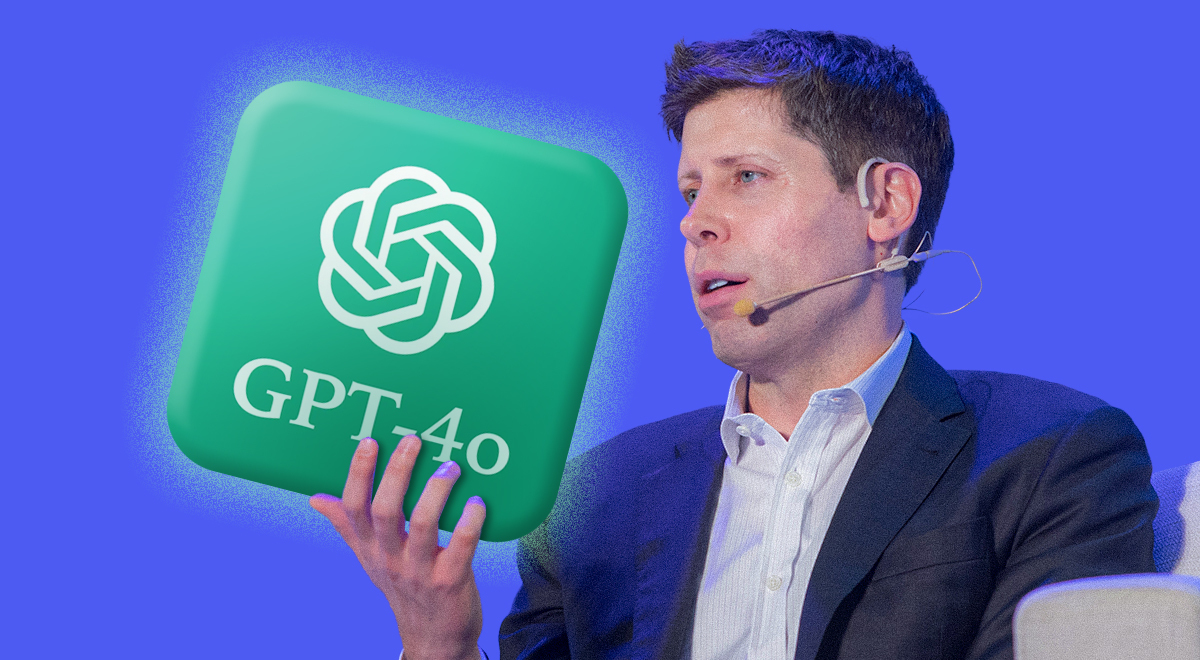
Image by Cybernews.

 Follow us
In a major U-turn, OpenAI is restoring the ability for users to play with older AI models, including the beloved GPT-4o, which was removed when the GPT-5 system was launched last week.
The launch of GPT-5 was supposed to be a triumph, and it might still be. But so far, the rollout of the upgraded model has been overshadowed by not insignificant issues.
The one that enraged users the most was the fact that OpenAI presented GPT-5 as a “unified system” that would automatically route user queries to the best model for that particular job.
Users quickly realized this meant that the company had removed the menu that allowed them to use whichever model they liked most. They especially like the GPT-4o model, launched in March 2023.










Those who are paying for memberships such as ChatGPT Plus immediately felt betrayed – and told the world about it. Users who depend on their freedom to work with a toolkit of different models began to cancel their subscriptions and sign online petitions.
OpenAI’s reaction was quick. When introducing GPT-5 last week, the firm’s CEO Sam Altman called the chatbot “a significant step along our path to AGI” and boasted that the “useful, smart, fast, and intuitive” offering is a major upgrade over the company’s previous models.
GPT-5 is here.
undefined OpenAI (@OpenAI) August 7, 2025
Rolling out to everyone starting today.https://t.co/rOcZ8J2btI pic.twitter.com/dk6zLTe04s
But on Sunday, Altman moved to do damage control on X. He acknowledged that OpenAI had misjudged the situation and announced a bunch of concessions as a peace offering.
“If you have been following the GPT-5 rollout, one thing you might be noticing is how much of an attachment some people have to specific AI models,” he wrote in a long X post.
“It feels different and stronger than the kinds of attachment people have had to previous kinds of technology (and so suddenly deprecating old models that users depended on in their workflows was a mistake).”
If you have been following the GPT-5 rollout, one thing you might be noticing is how much of an attachment some people have to specific AI models. It feels different and stronger than the kinds of attachment people have had to previous kinds of technology (and so suddenly…
undefined Sam Altman (@sama) August 11, 2025
Additionally, in a direct reply to a user who asked whether OpenAI was bringing back the 4o model, Altman said: “It’s back! Go to settings and pick ‘show legacy models.’”
That means that while GPT-5 remains the default, users can now opt back into the older versions, which they perhaps trust more, at least for now.
To further appease unhappy customers, Altman added: “Today we are significantly increasing rate limits for reasoning for ChatGPT plus users, and all model-class limits will shortly be higher than they were before GPT-5.”
today we are significantly increasing rate limits for reasoning for chatgpt plus users, and all model-class limits will shortly be higher than they were before gpt-5.
undefined Sam Altman (@sama) August 10, 2025
we will also shortly make a UI change to indicate which model is working.
The new cap seems to be 3000 queries. Plus, Altman promises more transparency: an upcoming UI change will show users which model is actively responding to their prompts.
According to OpenAI, GPT-5 is roughly 45% less likely to make factual errors than GPT-4o, and can deliver PhD-level responses on subjects such as engineering, law, and health.
However, GPT-5 has already demonstrated “shockingly low” safety, with the raw model without a system prompt “nearly unusable for enterprise out of the box.” Several security teams managed to jailbreak GPT-5 in less than 24 hours after its release.
