How to tell if your mobile number has been hacked and what to do next
What would you do if your phone suddenly showed "No Service" while everyone around you had a full signal? For many people, that is the first warning sign that their mobile number has been hacked.

Image by Cybernews.

 Follow us
What would you do if your phone suddenly showed "No Service" while everyone around you had a full signal? For many people, that is the first warning sign that their mobile number has been hacked.
SIM swap fraud, a type of fraud where a criminal takes control of your mobile number, is no longer a unique or niche cyber/economic crime. It’s one of the fastest-growing forms of fraud against individuals and companies.
In the UK, Cifas reported a 1,055% rise in unauthorized SIM swap fraud cases from the previous year, increasing from 289 in 2023 to nearly 3,000 by 2024. Marks & Spencer's cyberattack employed a similar process to access its internal system, highlighting the vulnerability that corporate security faces when attackers hacked a mobile number and social engineered the IT department into resetting critical login information.
On the other side of the pond, the FBI's Internet Crime Complaint Center opened over 1,000 SIM swap cases in the US, resulting in victims losing almost $50 million. Earlier this year, attackers hacked the official social media account of the US Securities and Exchange Commission through a SIM swap, using it to post a fake statement that briefly inflated the price of bitcoin.
Cryptocurrency investors have also lost millions of dollars when fraudsters hacked their mobile numbers and emptied their digital wallets. Ten thousand miles away from the White House, Australia reported a 240% increase in SIM porting fraud.






Your mobile number has become a skeleton key to your digital life. Banks, email providers, and others still use text messages to send security codes.
How SIM swap attacks work
Attackers will begin by obtaining enough personal information to impersonate you. Typically, this information is obtained from phishing, past data breaches, or publicly shared data on social media.
Once they obtain that information, the target calls or visits your carrier pretending to be you.
They will say they lost their phone or need to activate a new SIM. If the carrier representative is convinced, they transfer your number to the attacker's SIM. At that moment, your own device goes dark. You cannot make calls, send texts, or receive verification codes.
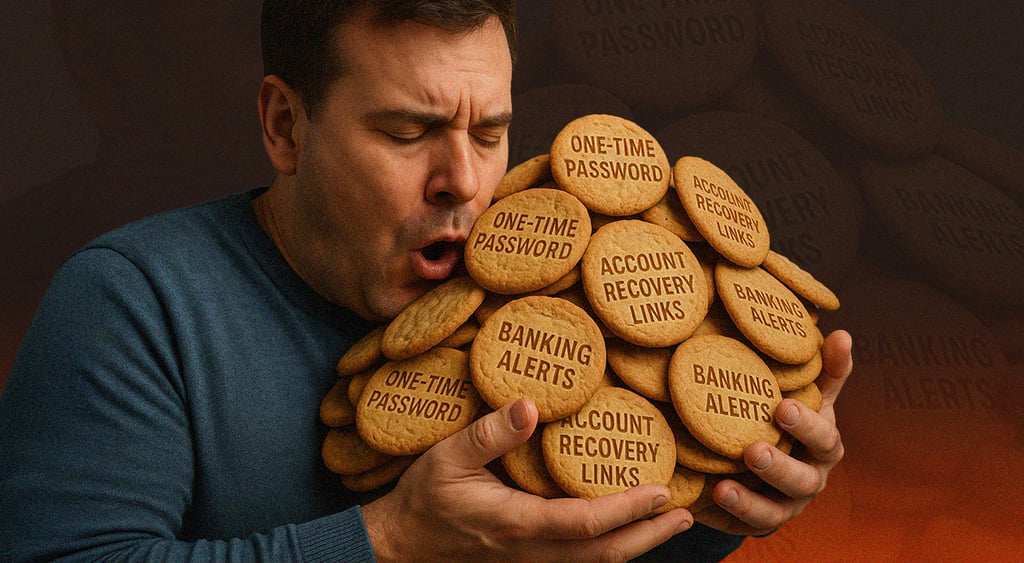
The attacker immediately begins intercepting one-time passwords, account recovery links, and banking alerts. They reset passwords, lock you out of your accounts, and in many cases, move quickly to drain financial accounts before you even notice.
Cybernews has repeatedly warned about the dangers of SMS-based two-factor authentication, but it remains the preferred method for many banks. Consider this a timely reminder that once your number is gone, your texts are gone too, and so is your security.
SIM swap warning signs
The first indication of a possible compromise is a sudden and unexplained issue with your service. If you received a "thanks for the SIM transfer" message from your carrier when you didn't request to have your SIM transferred, contact your carrier directly (not from the number in the SMS) to check.
Another warning sign is losing access to your personal accounts. If your login has not changed, but your correct password suddenly does not work, the criminal may have also changed your recovery information.
The Cybernews community is talking about this. Be a part of the conversation.
While this is taking place, watch for significant increases in data usage, unfamiliar apps installed, or people receiving odd messages from your accounts. These indicate that malware or a remote access tool is being used to control your phone.
Banking and online services send alerts when they see unusual logins. Ignore those alerts at your peril. If you get even a new device notice or multiple login failures, those events can be tied to a SIM swap happening right now.
What to do right now if you think your SIM was swapped
Contact your mobile carrier directly. Inform them that you suspect your number has been swapped without your consent. Request them to suspend your account, cancel the transfer, and issue you a new SIM. In some cases, they may offer you a port freeze or account PIN if available. Visiting a physical location may expedite the restoration process.
Next, you should secure your financial accounts. Inform your credit card company and bank of the situation. Ask them to monitor your accounts for any potential fraud and consider temporarily freezing them if necessary. All accounts using SMS codes for two-factor authentication should now use app-based two-factor authentication.
If there is a strong suspicion of malware, scan your phone for all malware. If suspicious applications still exist or you have experienced instability with your devices, back up your files and perform a factory reset. After the factory reset, reinstall ONLY trusted applications.

Finally, reach out to your contacts. The attackers may have unsolicitedly used the victim's number to access your contacts and employment office. Please inform people not to trust unsolicited conversations about money transfers from your number until you have verified that you have recovered access.
Long-term precautions
Recovery from a SIM swap is an arduous journey. Prevention is far better than robbery. There are numerous things you can implement today. The best advice is to stop using SMS and start using stronger forms of authentication.






Authenticator apps like Google Authenticator, Authy, & Microsoft Authenticator create codes on the app on your device, and not your phone number. Hardware Tokens, like Yobikey, go a step further and actually require you to have the hardware token to get validated. Both methods eliminate the possibility that the attacker would take control of your SMS and obtain your codes.
Request more security from your carrier. Ask about setting an account PIN, and/or active port-out protection. Some cell companies allow you to lock the number so that no SIM change can occur without going through a process of in-person identification. This may take more time than just a phone call, but it is well worth it. Use any mechanisms carriers have available, just as you would a bank PIN.
Monthly, check the login history on your email, cloud service, and social media accounts for strange devices. Set alerts for new logins or password resets. Review the monthly bank statements and credit card statements for any signs of fraud. Many victims realize the fraud committed against their accounts after losing money to an unauthorized transfer.
In the workplace, train employees on the risks associated with SIM swap fraud and encourage them to use authenticator apps for company accounts. Have IT watch for suspicious login attempts and investigate any sudden phone outages reported by employees.
Not having control of your mobile phone number can feel like losing control of your life. A mobile phone number is no longer just a means of contact. It is simply the digital key.
So, next time your phone says, "No Service," for no reason, don't think it's a minor issue. Ask, is this a SIM swap in progress? And act like it is.
Unlock more exclusive Cybernews content on YouTube.