Thousands of companies fall victim to this particular cyberattack. Act now
Ransomware attacks have surged this year, and US-based companies remain the prime target for cybercriminals.

Image by Cybernews.

 Follow us
Ransomware attacks have surged this year, and US-based companies remain the prime target for cybercriminals.
Over 6,000 ransomware cases were exposed on the dark web between January and September, a 47% increase from the previous year. And these are just the documented cases that cybersecurity company NordStellar found by continuously monitoring over 200 blogs operated by ransomware groups.

Unsurprisingly, US businesses took the most brutal hit.





"The US is home to numerous profitable public businesses, and this, coupled with strict regulations, makes these companies a higher-profile target for cyberattacks. Their potential for high profitability, combined with a higher likelihood of meeting ransomware demands to resolve incidents quickly, increases the chances of success for attackers," Vakaris Noreika, cybersecurity expert at NordStellar, is quoted as saying.
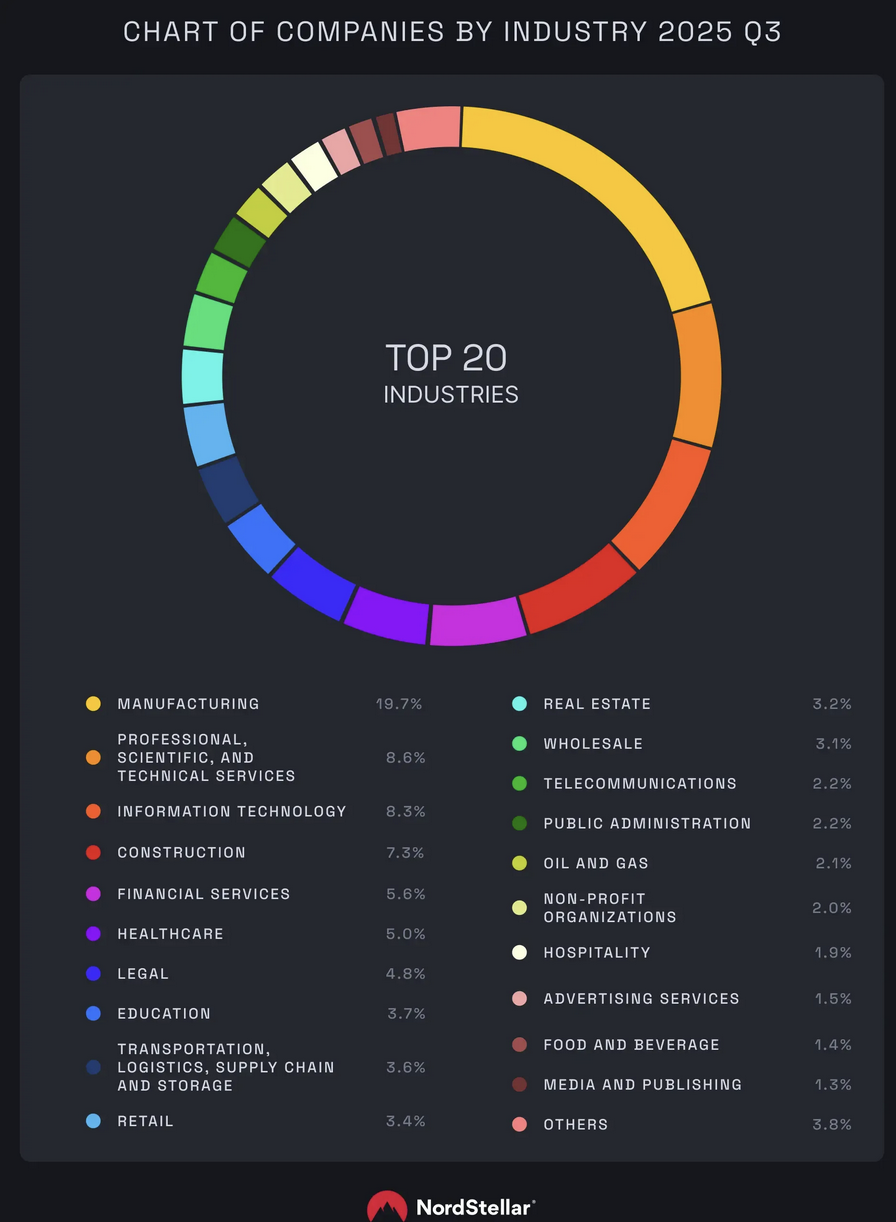
In Q3, the manufacturing industry was the most affected, with 245 reported cases. These companies are often inclined to give in to ransomware gangs’ demands as they face high operational downtime costs.
It seems that criminals favor smaller businesses, which can’t afford the cost of downtime, data loss, and reputational damage that a full-blown ransomware attack could cause.
"Ransomware actors usually perceive smaller businesses as lower-risk targets because they might lack a sophisticated IT infrastructure, operate on low cybersecurity budgets, and not have the means to investigate or report attacks to authorities," says Noreika.
Veteran ransomware gangs such as Qilin, Akira, and Play continue to dominate the cybercrime landscape.

How can you protect yourself from ransomware attacks?
- Organize cybersecurity training on phishing scams
- Introduce multi-factor authentication and a password management system
- Monitor for external vulnerabilities and any potential data leaks on the dark web that could lead to a more sophisticated attack
- Craft a recovery plan
- Back up critical data
"Another important factor is monitoring and addressing unknown cybersecurity gaps. With more businesses embracing hybrid or remote work models, introducing unmanaged devices and relying on third-party vendors, the attack surface is expanding, and any endpoint can be exploited," says Noreika.
Unlock exclusive Cybernews content on YouTube