How blue light cuts the Moon out of menstrual cycles
The Moon may shape menstrual cycles in ways we ignore. New research reveals how modern light is breaking this hidden rhythm.

Image by Cybernews

 Follow us
The Moon may shape period cycles in ways we ignore. New research reveals how modern light is breaking this hidden rhythm.
Those days when you’re all off-kilter and out of sync – do you blame it on the Moon?
Humans have been tracking the Moon for almost 30,000 years now, though the main difference is that we no longer rely on cave art to record it.
Today, word-of-mouth accounts suggest that hospital receptions and police stations are rife with wayward incidents.
Folklore offers a lunar alibi, explaining why we might feel restless, moody, or even why fertility cycles seem affected.





There’s also a prevailing awareness that blue light pouring out of our devices sends us into a wonky sleep cycle. But can it also knock us out of sync with the Moon?
A new study from a university in Würzburg has examined correlations between women's menstrual cycles over five decades and synchronization with the Moon.
Researchers tracked over 22,000 menstrual cycles across most continents, spanning from the 1960s until the present.
The key finding was that before the dawn of the smartphone, circa 2010, there was a binding synchronicity between biology and the Moon cycle, largely during full and new Moon cycles.
Then, as chronobiologist Charlotte Förster explains: “We show that synchronization with the Moon has decreased significantly since the introduction of LEDs and the increasing use of smartphones and screens of all kinds.”






Controversy and outliers
Now, of course, the menstrual-Moon sync is a controversial link to start with, as author Förster concedes: “Moon clocks are widespread in marine organisms, but have not yet been proven in humans.”
Previous research, however, has shown at least a partial synchronization between celestial and biological bodies, especially in relation to sleep cycles, as disruption is common in new and full Moons, according to chronobiologists Christian Cajochen and Horacio de la Iglesia.
There are caveats. First, there are billions of people on the planet with different circadian rhythms.
Then there’s the chance that the menstrual groove could be entirely coincidental. Other stuff in the mix could include temperature fluctuations, stress levels, seasonal light activity, and age-related hormonal shifts.
It is completely unclear how such a lunar clock can be synchronized by the small cyclical changes in gravity between the Earth and the Moon.Charlotte Förster
Moonlight in peril
The thing is, it would be just as much a leap of the imagination to stubbornly say there’s zero link whatsoever between the Moon and ovulation.
Würzburg’s study shows a partial link to a complex topic. With the blue light of devices eroding the link, it adds weight to the original folkloric belief, without fully settling the debate.
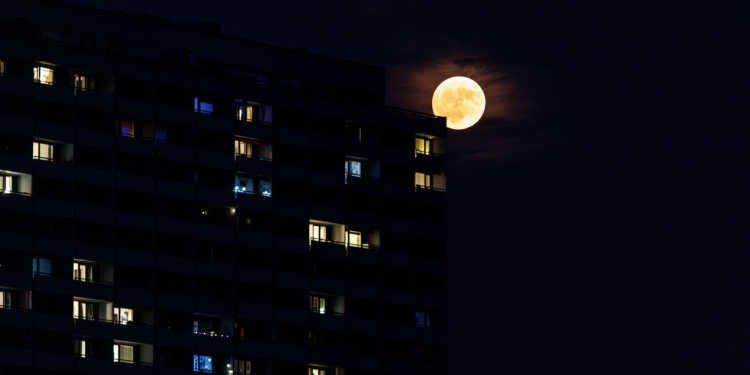
The nuances within the study showed that the clearest drop in concurrence happens in built-up areas, where artificial light exposure is omnipresent.
As it might not be just the birds singing at 3 a.m., human photoreceptors pick up on this pervasive artificial light, which outshines moonlight.
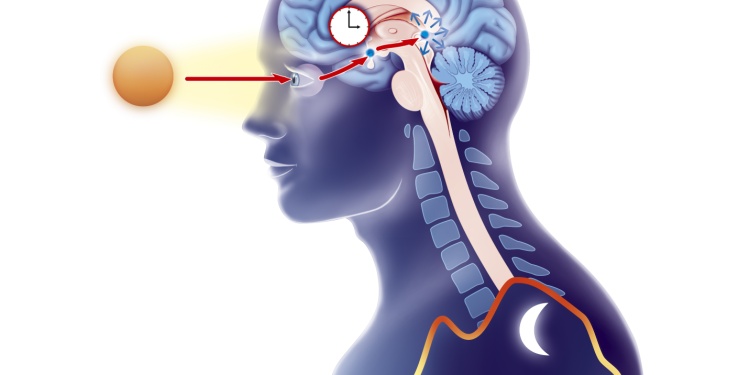
The blare of modern LED lighting is brighter and bluer than time before, which plays haywire with melatonin production.
“LEDs have much higher energy than gas lanterns and light bulbs… they have a high proportion of blue light, to which our photoreceptors in the eye are particularly sensitive,” explained Förster.
Far from being a casual (if somewhat taboo) chat you’d have about folkloric believing vs non-believing, Förster also weighed in with a more sweeping context.
“Since period length appears to be a possible age-dependent marker for female fertility, our findings could be relevant not only for human physiology and behavior, but also for fertility and contraception,” concluded Förster.
Unlock more exclusive Cybernews content on YouTube.