Why Snake and Tetris still belong on every screen
Why is it that a game built by one man in a Soviet lab or another tucked into a 1990s mobile phone still holds up better than some of today's multi-million-dollar blockbusters? Cybernews investigates.

By Cybernews.

 Follow us
Why is it that a game built by one man in a Soviet lab or another tucked into a 1990s mobile phone still holds up better than some of today's multi-million-dollar blockbusters? Cybernews investigates.
Gaming has become bigger than the movie and music industries combined. Every year, we see a crop of new must-have AAA titles built on cinematic ambition, stuffed with photo-realistic textures, motion-captured performances, and sprawling open worlds.
Many games even have much bigger budgets than Hollywood blockbusters. Star Citizen's development costs famously hit $700 million, and even this figure is chump change compared to the heavily rumored $2 billion budget for GTA 6.
The trailers for AAA titles deliver the wow factor, and launch events feel like red-carpet movie premieres. But the gameplay in many popular franchises feels lazy and uninspiring.
Despite investing millions, some of the most popular releases are falling flat in the one area that matters most, being fun. As a result, many gamers are returning to retro classics and new indie games, boosting the industry's indie scene to over $4 billion.






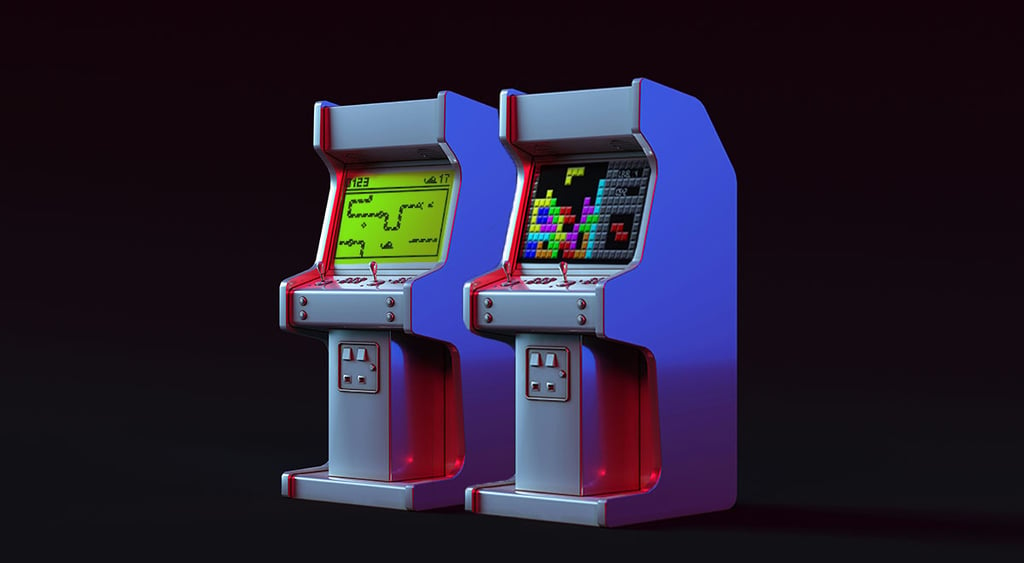
It's refreshing to see that old-school gaming still rules in our tech-obsessed age. But we couldn't have gotten here without the unsung heroes of gaming, Tetris and Snake.
Tetris, Snake, and the power of simplicity
Tetris and Snake, two of the most unassuming games ever made, continue to captivate players across generations and devices. They offer a clear goal, instant feedback, and an addictive loop. And somehow, that's enough to outlast everything else.
Decades-old gaming classics like Snake and Tetris are still being played, studied, and shared without reinventing their core mechanics. The Museum of Modern Art in New York added Tetris to its permanent collection in 2012 as an example of brilliant design, and there has been talk of including the original Nokia Snake.
Just like those everyday tools, the magic of these games lies in their stripped-back design. There's nothing flashy to mask the gameplay. It simply works.
Tetris: From Soviet Simplicity to Global Phenomenon
The story behind Tetris can be traced back to a Soviet research lab in 1984. Alexey Pajitnov created it while experimenting with geometric puzzles, never imagining the global icon it would become. The game spread through unofficial shareware, then caught fire when bundled with the Nintendo Game Boy in 1989.
Suddenly, people who'd never considered video games became addicted to arranging falling blocks. Tetris was approachable, portable, and impossible to put down. Even early on, critics recognized what made it special. Macworld described it as "bewitching" in its simplicity. The term "Tetris effect" describes players dreaming about falling blocks. Its cultural impact was massive, long before smartphones or the internet made viral fame easier to catch.
Snake: The Quiet Giant of Mobile Gaming
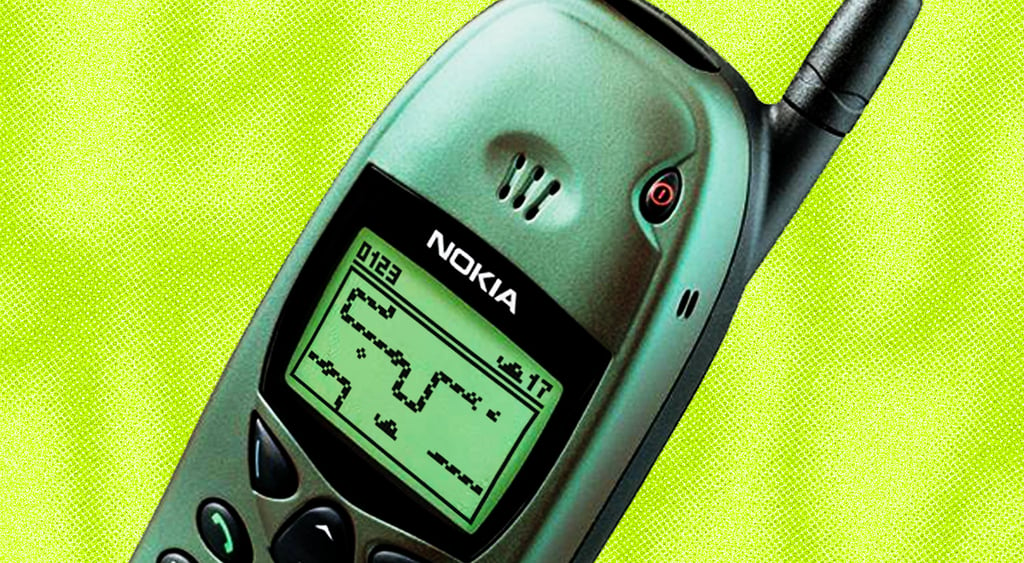
The idea behind Snake goes back even further than Tetris. The first version, Blockade, hit arcades in 1976. But it wasn't until 1997, when Nokia added a version of the game to its 6110 mobile phone, that Snake became a household name. The game was initially intended to showcase the phone's infrared multiplayer feature. It ended up introducing an entire generation to mobile gaming.
Snake needed just a handful of buttons and a tiny screen. Yet it was endlessly addictive. You guide a pixelated snake around a grid, eat pellets, and try not to crash. That's it. For many people in the late '90s, Snake was their first taste of digital gaming and one they never forgot.
Nokia's snake, the mobile game that became an entire generation's obsession pic.twitter.com/Q4BRJdDhKb
undefined Historic Vids (@historyinmemes) July 18, 2023
Evolution without Complication
Over the years, Tetris has been remade countless times: Tetris DX, Tetris Effect, Tetris 99, and even mashups like Puyo Puyo Tetris. But the basics haven't changed. Blocks fall. You rotate and arrange them. Lines disappear.
No matter how advanced the visuals get or how many players you compete against online, the gameplay is still recognizably Tetris. It doesn't need a reinvention. That original code still holds up.
Even the attempts to modify it drastically haven't worked well. The games that endure are the ones that respect what made the original addictive in the first place. Snake took a similar path. After Nokia, it spread everywhere onto PCs, PDAs, and smartphones. Developers added 3D effects, multiplayer, and even obstacles. But the absolute joy stayed in the simplicity. Move. Eat. Grow. Don't crash.
Some iterations did find new energy. Slither.io in 2016 brought multiplayer chaos to the formula and became a viral hit. But at its heart, it was still Snake. Whether you're playing a high-tech version or an essential browser throwback, the rules don't change—and that's part of the appeal.




Why they still work
Both games can be explained in seconds. Tetris: stack blocks to form complete lines. Snake: Eat the pellet; don't run into walls. Anyone can pick them up and start playing immediately, but mastering them? That takes time. The challenge grows with you.
This clarity makes them feel timeless. There's no interface bloat, tutorial, or heavy graphics, just addictive gameplay. In 1989, Computer Gaming World called Tetris "timeless" for this reason. It's still true.
Snake and Tetris don't demand high-end hardware. They've run on everything from Soviet desktops to flip phones. That low barrier made them global and playable in places where modern gaming rigs are out of reach. And because they don't rely on text or story, they transcend language and culture.
They're also ageless. Kids love them. Adults find them soothing. Grandparents play with them out of curiosity or nostalgia. A five-minute session is enough to feel entertained, no matter how old or where you're from.
What makes other games fade
Compare that to something like Guitar Hero. In the 2000s, it was everywhere. But it depended on plastic instruments and music licensing. When that novelty wore off, so did its popularity. Tetris and Snake don't rely on accessories or trends.
Another popular title from my gaming past is Dragon's Lair, a massive arcade hit in 1983, famous for its animation. It looked terrific, but played like a memory test. The gameplay didn't hold up. Games like Tetris and Snake endure because their fun doesn't rely on flash. It comes from the interaction that still feels good decades later.
Dragon's Lair (1983)#animationtidbits #sakuga #animation #2danimation pic.twitter.com/iT5EuhXJgl
undefined Character Design References (@CDReferences) March 29, 2025
Developers often cite these games as ideal design examples. Taneli Armanto, who created Nokia's Snake, said the code was so clean and polished that he still plays it. Game makers who worked with early mobile phones learned lessons from Snake about what makes something playable with limited controls. Those same lessons apply to app design today.
Tetris is still referenced in design books and psychology research. It's been studied for its mental effects, used in cognitive therapy, and even included in academic programming courses.
The Classic Tetris World Championship is now a global event, with teenage players setting new high-score records using techniques like hyper-tapping and rolling. Their matches draw substantial online audiences.
Snake, meanwhile, shows up in classrooms and code tutorials. It's the go-to project for teaching logic, timing, and design fundamentals. And casual players are still feeding pixelated snakes across every kind of screen imaginable, from smartphones to smart appliances.
It's rare for anything in tech to feel permanent. But Snake and Tetris come close. Their code is simple, their gameplay addictive, and their appeal universal. You can play them on a phone or fridge today and still get hooked. Sometimes, at least, good design doesn't need to change. It just needs to be played.