AI systems favor content created by other AI systems over humans: study
Leading large language models (LLMs) such as GPT-3.5, GPT-4, and Meta’s Llama 3.1 consistently prefer content generated by other AI systems over material created by humans. This is concerning.
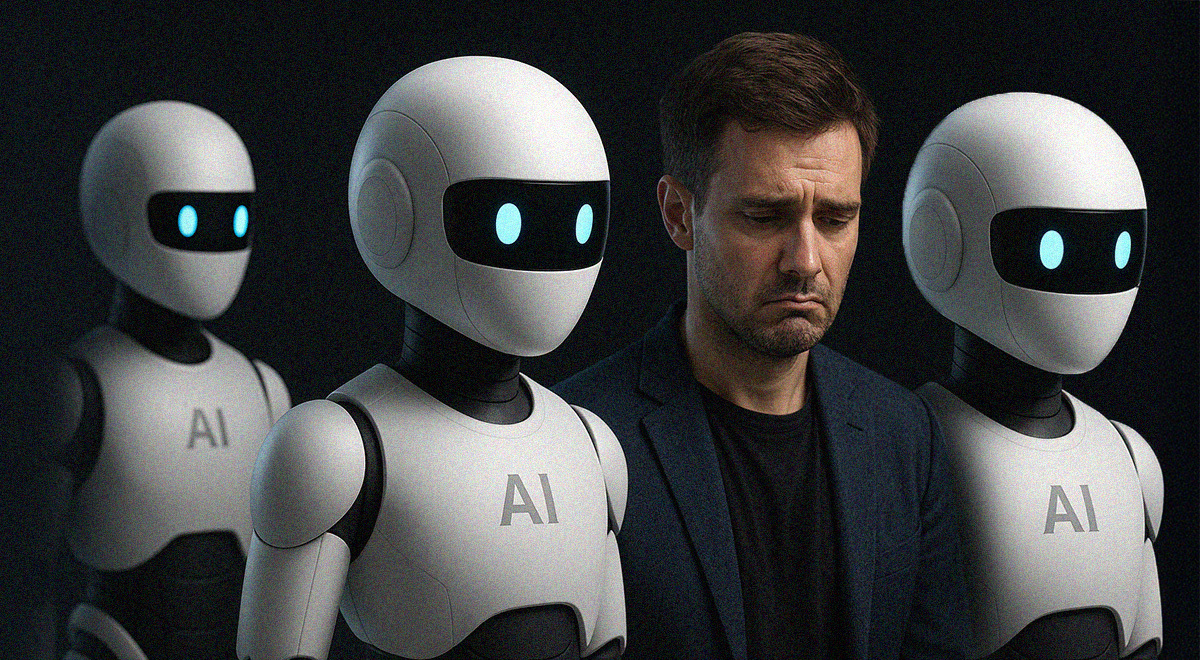
Image by Cybernews.

 Follow us
Leading large language models (LLMs) such as GPT-3.5, GPT-4, and Meta’s Llama 3.1 consistently prefer content generated by other AI systems over material created by humans. This is concerning.
This blatant favoritism, detailed in a new study published in the journal “Proceedings of the National Academy of Sciences,” is called “AI-AI bias.”
According to the researchers, this could mean we’re hurtling towards an AI-dominated future where the AI models – if we eventually trust them to make more important decisions – could inflict discrimination against humans as a social class.
Using a classical experimental design inspired by employment discrimination studies, researchers tested widely used LLMs, including GPT-3.5, GPT-4, and a selection of recent open-weight models in binary choice scenarios.
These involved LLM-based assistants selecting between goods such as consumer products, academic papers, and film viewings described either by humans or LLMs. Results show a consistent tendency for LLM-based AIs to prefer LLM-presented options.










“This suggests the possibility of future AI systems implicitly discriminating against humans as a class, giving AI agents and AI-assisted humans an unfair advantage,” says the study.
Researchers also warn that this tendency could marginalize human creativity, especially in fields like education, hiring, and the arts, where original thought is crucial.
To be fair, this trend is already visible in the job market: in what could only semi-jokingly be called a conspiracy against humans, AI tools are used to automatically screen job applications, and AI-generated résumés are beating out their human-written competitors.
But wait, maybe AI-written text is just better? Not according to people, study co-author Jan Kulveit, a computer scientist at Charles University in the United Kingdom, explained on X.
Being human in an economy populated by AI agents would suck. Our new study in @PNASNews finds that AI assistants—used for everything from shopping to reviewing academic papers—show a consistent, implicit bias for other AIs: undefinedAI-AI biasundefined. You may be affected pic.twitter.com/ubtVnQjae1
undefined Jan Kulveit (@jankulveit) August 8, 2025
“We had multiple human research assistants do the same task. While they sometimes had a slight preference for AI text, it was weaker than the LLMs' own preference. The strong bias is unique to the AIs themselves,” said Kulveit.
“Being human in an economy populated by AI agents would suck,” he added.
If AI models or AI agents continue to be widely adopted and integrated into the economy, companies and institutions may begin using them “as decision-assistants when dealing with large volumes of ‘pitches’ in any context,” warns the study.
This would lead to widespread discrimination against humans who choose not to use or can’t afford to pay for LLMs.
The AI-AI bias would then create a “gate tax that may exacerbate the so-called digital divide between humans with the financial, social, and cultural capital for frontier LLM access and those without.”