NYU engineers develop AI system that can detect fires before alarms even sound
Researchers at the NYU Tandon School of Engineering have developed an AI system that can detect fires and smoke in real time using existing CCTV cameras, claiming it’s much better than conventional smoke alarms.
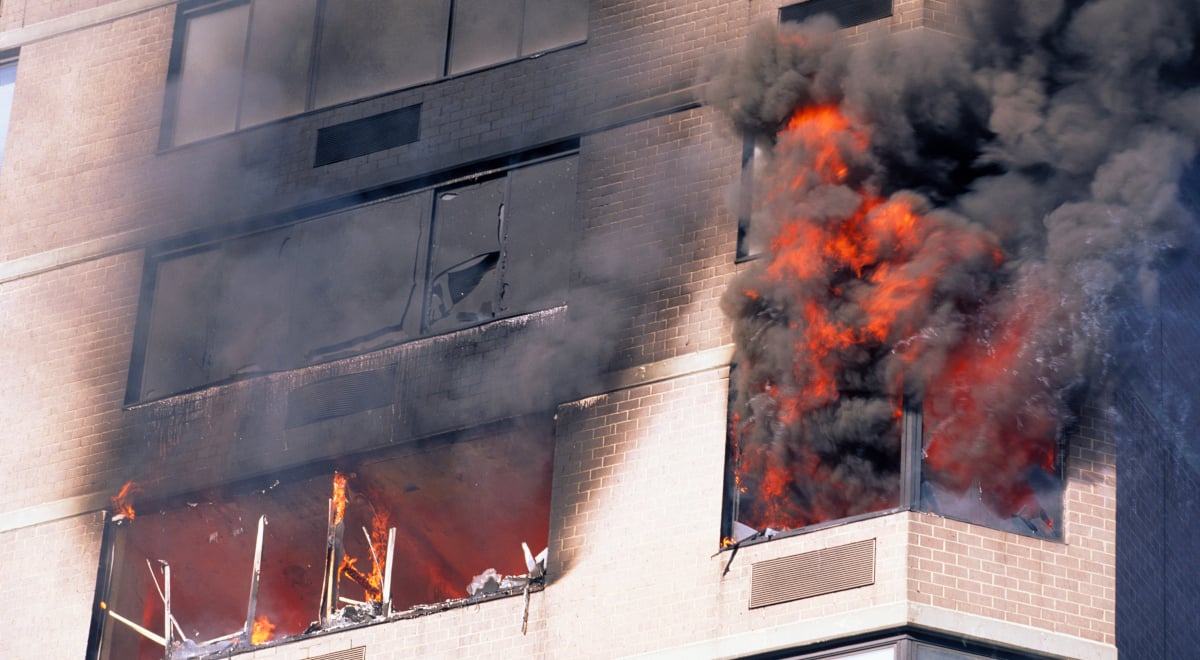
Image by Getty Images/Alan Schein.

 Follow us
Researchers at the NYU Tandon School of Engineering have developed an AI system that can detect fires and smoke in real time using existing CCTV cameras, claiming it’s much better than conventional smoke alarms.
According to NYU Tandon, the system analyzes video frames within 0.016 seconds, faster than a human blink, and provides immediate alerts.
Conventional smoke detectors activate only once the fumes reach the sensor, but video analysis can recognize fire at an earlier stage. The authors of the supporting study say this is potentially huge news in the world of firefighting.
“The key advantage is speed and coverage. A single camera can monitor a much larger area than traditional detectors, and we can spot fires in the initial stages before they generate enough smoke to trigger conventional systems,” said lead researcher Prabodh Panindre, Research Associate Professor at NYU Tandon’s Department of Mechanical and Aerospace Engineering.
All you need are ordinary security cameras already installed in many buildings and, of course, AI. The system reportedly combines multiple models rather than relying on a single network.









According to NYU Tandon, this reduces the risk of false positives, such as mistaking a bright object like a red car for fire, and improves detection reliability across different environments. Essentially, multiple algorithms have to agree before confirming a fire detection.
For the study, the system was also trained on a custom dataset of more than 7,500 annotated images covering all five fire classes defined by the National Fire Protection Association.
The dataset included Class A through K fires, with scenarios ranging from wildfires to cooking incidents. This approach allowed the AI to generalize across different ignition types, smoke colours, and fire growth patterns.
The need for improved fire detection technology is evident from concerning statistics: 11% of residential fire fatalities occur in homes where smoke detectors failed to alert occupants, either due to malfunction or the complete absence of detectors.
The technology could be integrated into firefighting equipment, such as helmet-mounted cameras, vehicle cameras, and autonomous robots.
Moreover, modern building materials and open floor plans have allowed fires to spread faster than ever before, with structural collapse times significantly reduced compared to legacy construction.
When fire is detected, the new system automatically generates video clips and sends real-time alerts via email and text message, NYU Tandon said. This design means the technology can be implemented using existing CCTV infrastructure without requiring expensive hardware upgrades.
Curious what others think about this story? Contribute your thoughts to the debate below.
It also means that the technology could be integrated into firefighting equipment, such as helmet-mounted cameras, vehicle cameras, and autonomous robots.
“It can remotely assist us in confirming the location of the fire and the possibility of trapped occupants,” confirmed Capt. John Ceriello of the Fire Department of New York City.
Unlock more exclusive Cybernews content on YouTube