Apple retires more iPhones ahead of iPhone 17 launch
In light of the upcoming release of iPhone 17, the company has updated its vintage iPhone list. This means Apple will discontinue support and no longer guarantee hardware replacements.
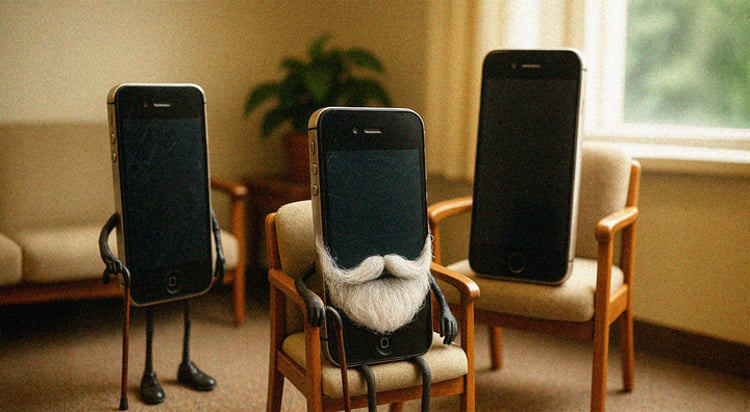
Image by Cybernews.

 Follow us
In light of the upcoming release of iPhone 17, the company has updated its vintage iPhone list. This means Apple will discontinue support and no longer guarantee hardware replacements.
September (usually) marks the full circle of an iPhone’s life. With new iPhone releases taking place in highly anticipated Apple events at the very beginning of Autumn, the company also announces the iPhones that will retire.
The new hello and the last goodbye to the market and users align because when a new iPhone is released, the company updates its iOS, thus making the older versions less relevant.
It’s important to note that Apple doesn’t disable old iPhones. Users can still use them even if they don’t receive the newest iOS. However, without it, after a certain point, those iPhones stop receiving major updates, including security updates.





The Cybernews community is talking about this. Be a part of the conversation.
Though Apple often provides security patches for older versions for a few years, eventually, tech-wise, they fall behind. This leaves owners with a choice: keep the older phone that’s slower and less secure, or upgrade to be up to date.
However, early upgrades from older phones didn’t always come without the company’s ulterior motives. Back in 2017, during the so-called “batterygate,” Apple admitted that it had slowed down the performance of older iPhones through software updates.
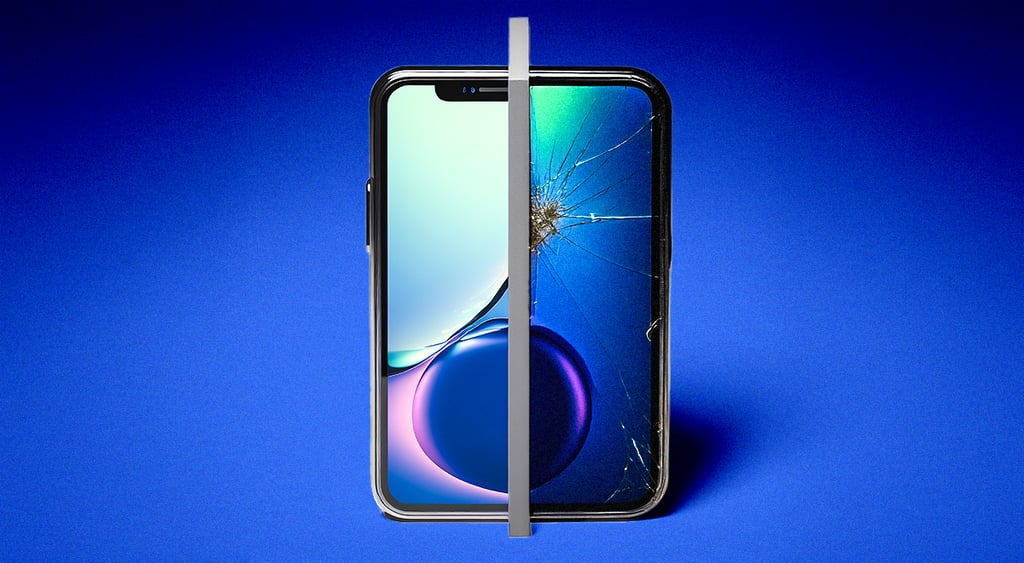
In the US alone, Apple paid a $500 million class-action settlement.
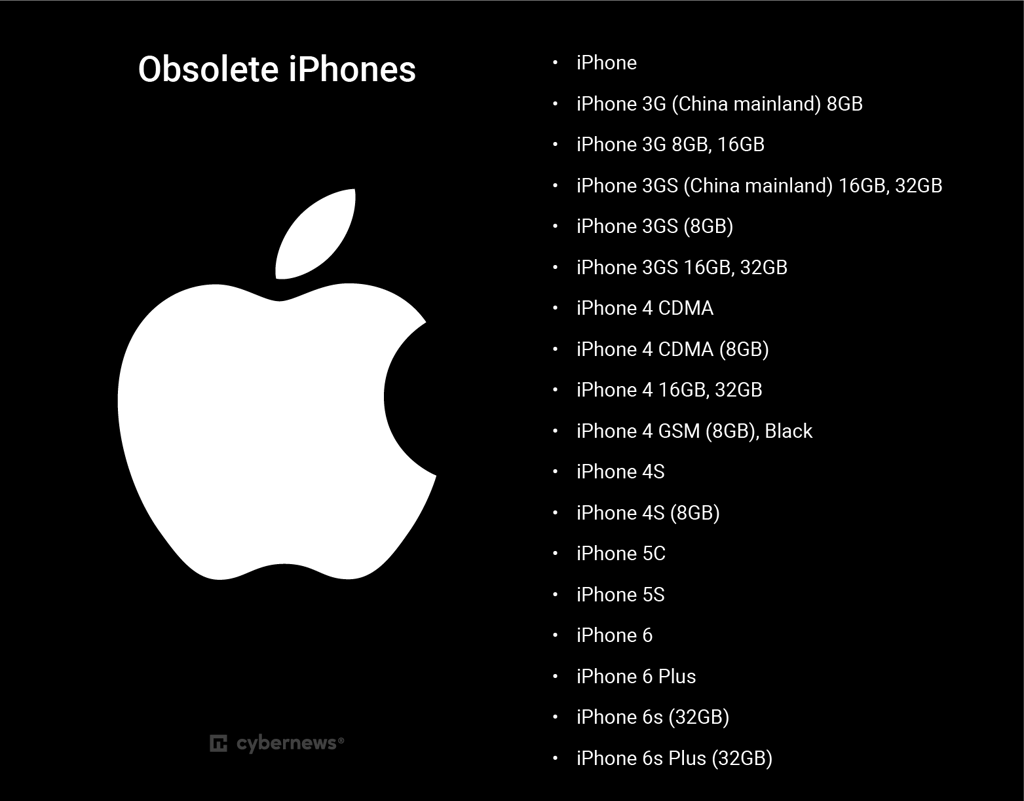
This time around, the iPhone 8, X, and XS series make it onto the vintage list, meaning that they’ll lose official hardware support. The obsolete list includes the iPhone 4, 5C, 5S, 6, and early 6s/6s Plus variants.
Apple classifies devices as vintage 5 years after sales end. Here is a list of all the iPhones added to the vintage list before:
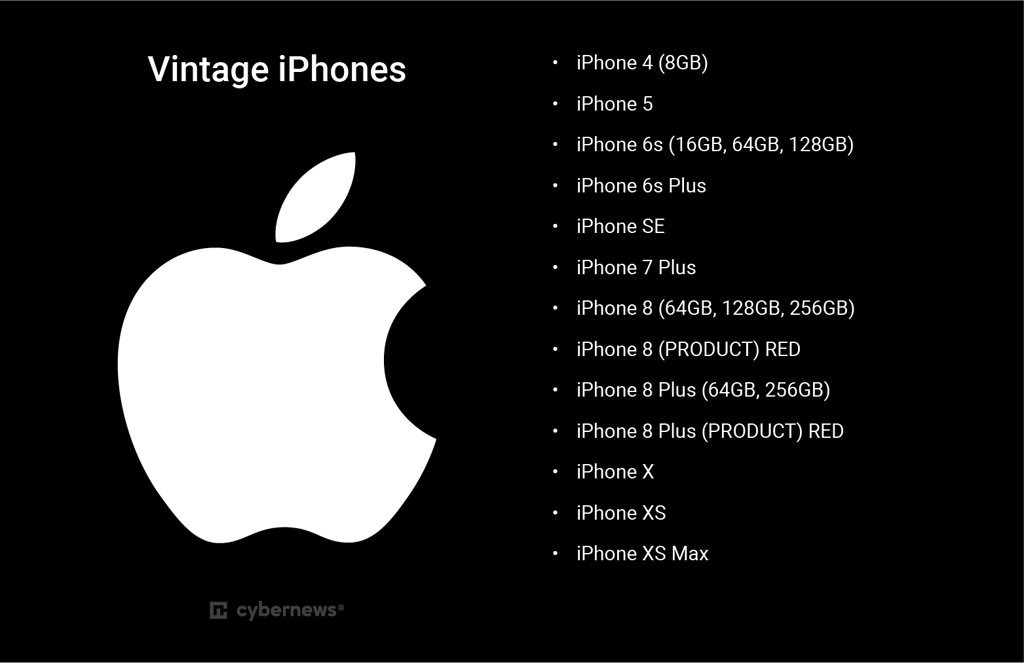
iPhones become obsolete after 7 years after the sales end. Here is a list of them:
As Apple prepares to unveil the iPhone 17 series at its “Awe Dropping” event on September 9th, one of the key mysteries is the new iOS and especially the virtual assistant Siri.
Specifically, this update is said to be a better competitor to OpenAI’s ChatGPT and Google’s Gemini.
Age isn’t the only reason to retire an iPhone
Not all iPhones resting in peace on obsolete or vintage lists made it there after the new iPhone was released.
Cybernews has previously reported that the iPhone SE and iPhone 14 had to retire because, at the time, they were the last ones to still be using a Lightning charger.




The Digital Markets Act stated that from 2025, all smartphones sold in the EU must have a USB-C port and be charged using a USB-C cable. The law aimed to standardize smartphones and, therefore, reduce electronic waste in the 27 EU countries. The changes did not affect users in the US.
The iPhone 12 came close to being taken off the French market.
In September 2023, France's Agence Nationale des Fréquences (ANFR) tested the iPhone 12 and found that it emitted a Specific Absorption Rate of 5.74 watts per kilogram when held in hand or carried in a pocket.
This is a measure of how much radiation your body takes in when a phone is near you, and the limit in EU countries is 4.0 W/kg.
At the time, the French government requested that Apple stop iPhone sales in France. Even though Apple contested the methodology the ANF used to conclude its findings, the company issued a software update across all 27 EU countries to reduce SAR levels.
