Who gets the ticket? Waymo self-driving car pulled over by California police
An incident with a Waymo robotaxi in San Bruno has exposed legal gaps in California’s autonomous vehicle rules, sparking new laws aimed at holding self-driving carmakers accountable and improving road safety.

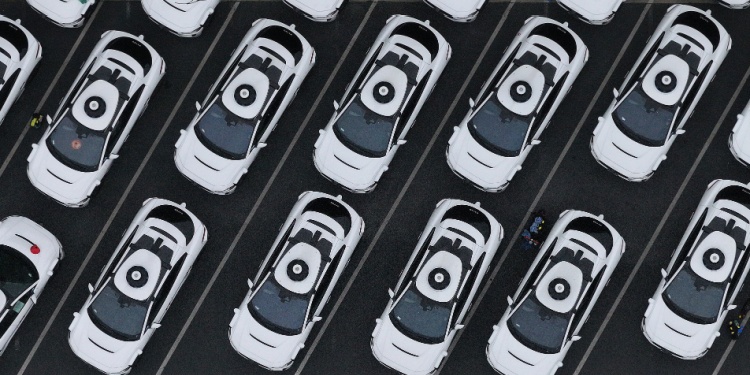
Image by Cybernews

 Follow us
An incident with a Waymo robotaxi in San Bruno has exposed legal gaps in California’s autonomous vehicle rules, sparking new laws aimed at holding self-driving carmakers accountable and improving road safety.
Police in San Bruno were left confounded after stopping a car during what they thought was a routine check.
A Waymo robotaxi was stopped for making a forbidden U-turn while police were conducting a DUI enforcement operation.
Even though no one was behind the wheel, the officers had no choice but to bypass issuing a ticket, as their records did not include the option of “robot.”
This example exposes the fact that machines are capable of imperfect behavior, and also brings legal uncertainty into the mix.






Waymo’s response and track record
Earlier this year, Waymo announced a partnership with Toyota to increase autonomous testing in Japan, as well as testing robotaxis in NYC.
As a result of the San Bruno incident, Waymo has maintained that its testing software is designed to comply with safety regulations.
The company is currently investigating why a vehicle would perform a questionable manoeuvre like a U-turn.
The company had to recall 1200 cars in May this year after collisions with barriers.
Federal investigators are now closely monitoring erratic driving behavior after these mishaps to determine whether or not the cars are truly safe.
Regulatory gaps and upcoming law
California law blocks any possibility of driverless automobiles being issued warnings or fines.
Beginning July 2026, however, officers will be able to issue a warning of non-compliance, which is a document directly to the company that their vehicle has broken the law.
Such a notice would demand more company accountability with a view to decreasing gross negligence.
The legislation also requires a 24/7 hotline to be answerable to the first person on the scene, be it police, firefighters, paramedics or anyone else.
The company at fault – Waymo, for example – would have just two minutes to remove its vehicle from the scene, but whether that is for it to drive itself away or not remains unclear.






Unlock more exclusive Cybernews content on YouTube.