What's the difference between Tor and VPN
Our in-house cybersecurity experts and journalists, renowned for major reports like The Mother of All Breaches, conduct transparent, unbiased VPN testing and in-depth analysis.
With 750+ articles crafted based on real-world research, we empower readers to make informed purchasing decisions through first-hand expertise.
Learn more

The Tor vs VPN question comes up a lot when you start looking for more online privacy. At first, both tools seem to do the same thing: hide your IP address and encrypt your traffic. In reality, they work in very different ways.
Tor sends your browser traffic through several volunteer-run servers, which gives you strong anonymity but often slower speeds. A VPN routes your traffic through one secure server, this way protecting your data across apps and devices with less impact on performance. Tor is also free and built for anonymity, while VPNs are usually paid and better for daily online activities, streaming, and secure browsing. Below, I compare them in more detail.
What is a VPN?
Virtual private networks are a popular cybersecurity product because of their ease of use and versatility. However, many netizens still have no idea how a VPN works (but that isn’t necessary to gain its benefits).

In short, a VPN is an intermediary between you and your ISP (internet service provider). It lets you connect to a remote server to change your location and gain a different IP address. Additionally, your traffic is encrypted using AES-256 or XChaCha20 ciphers, rendering it unreadable and impenetrable to outsiders, such as your ISP and Wi-Fi network admins.
VPNs are configured using specialized apps compatible with computers, mobile phones, routers, smart TVs, browsers, and more. That means you can use them to protect your entire household against various threats.
What is Tor?
Tor (previously an acronym for “The Onion Router”) can refer to a few things. Firstly, there’s the Tor browser, the gateway to the dark web. Then there’s the Tor network, which is the array of servers (typically called nodes or relays) that volunteers contribute. The image below shows how these two components work together to secure users.

Briefly put, launching the Tor browser connects you to a handful of nodes (at least three) from the Tor network. Each hop between the relays is encrypted for maximum security. Meanwhile, the minimum of three relays means tracing your path is impossible, even if someone finds out the entry or exit IP address. However, the excess number of jumps and encryption lead to ultra-slow connection speeds.
Tor vs VPN comparison
Now that we have a surface-level understanding of the two products, let’s look at a few notable differences between Tor and VPN.
| Tor | VPN | |
| Encryption | Multiple layers of encryption in the Tor network | Encrypts traffic between you and the VPN server |
| Network type | Decentralized | Centralized |
| Speed | Usually slow due to multiple hops | Usually fast, although can vary based on numerous factors |
| Bypassing censorship | Can bypass online censorship | Can bypass geo-blocking and online censorship |
| Trust | Relies on trust in the volunteer-operated network | Relies on trust in the VPN provider |
| Cost | Free | Subscription-based or free |
| Use cases | Whistleblowing, accessing sensitive information | General internet privacy, bypassing geo-restrictions |
| Applicability | Specific anonymity-focused use cases | Very versatile and useful in various scenarios |
| Access to the dark web | ✅ Yes | ❌ No |
The table above should’ve given you a general understanding of the different audiences that Tor and VPN services cater to. Still, it’s worth expanding on each topic further.
Anonymity and encryption
Encryption is an essential part of online anonymity. However, not all encryption types are equal, and you can have numerous layers of it, although it can be excessive for everyday use.
Tor employs multiple encrypted nodes to ensure users are protected at all times, even if one of the relays is compromised. This is done because the most prolific Tor users deal with extremely sensitive information. For example, journalists trying to expose human rights violations or activists hiding from authoritarian governments.
Meanwhile, VPNs employ a single layer of cutting-edge XChaCha20 or AES-256 encryption. It’s enough to keep all your activities confidential without impacting performance. Most importantly, it’s strong enough to ensure that no modern-day computer could decipher it.
Connection speed
The most noticeable difference when testing VPN vs Tor is overall connection speed. Unsurprisingly, Tor consistently leads to longer loading times because your web traffic has to make multiple detours to connect to each node. Furthermore, you’re likely connecting to suboptimal regions since the relays are assigned randomly.
On the flip side, a VPN needs to connect to one remote location (although there are VPNs with multi-hop options if needed). Another favorable aspect is that VPN customers can freely choose their connection point, which can be right next door for minimal speed loss. Finally, the fastest VPN services utilize efficient tunneling protocols like WireGuard, leaving Tor further in the dust.
Bypassing censorship and geo-restrictions
Both Tor and VPNs can bypass online censorship and surveillance. However, VPNs gain the upper hand when dealing with geographical restrictions because customers can freely choose a region they wish to connect to. This feature makes it easy to change your location and unblock various content exclusive to other areas.

One of the most popular use cases is unearthing geo-blocked movies and TV shows on global streaming services like Netflix. If that isn’t enough, you can use a streaming VPN to access streaming platforms unavailable in your region. Meanwhile, Tor isn’t suitable for these tasks because your virtual location is assigned randomly.
Legality
Unsurprisingly, the legal status of both VPN software and the Tor browser varies based on region. The majority of countries respect user privacy and freedom of expression and thus don’t limit these tools.
But that quickly changes in regions known for surveillance, censorship, and general lack of freedom. Famous examples include China, Russia, North Korea, Belarus, and Iraq. Therefore, we recommend thoroughly researching whether Tor or VPNs are legal in your country if you have doubts.
Access to the dark web
Anyone familiar with the dark web knows you can only reach it using the Tor browser – no exceptions. However, some VPN services, for example, NordVPN, are suitable for the dark web and allow you to connect to the Tor network using their software.
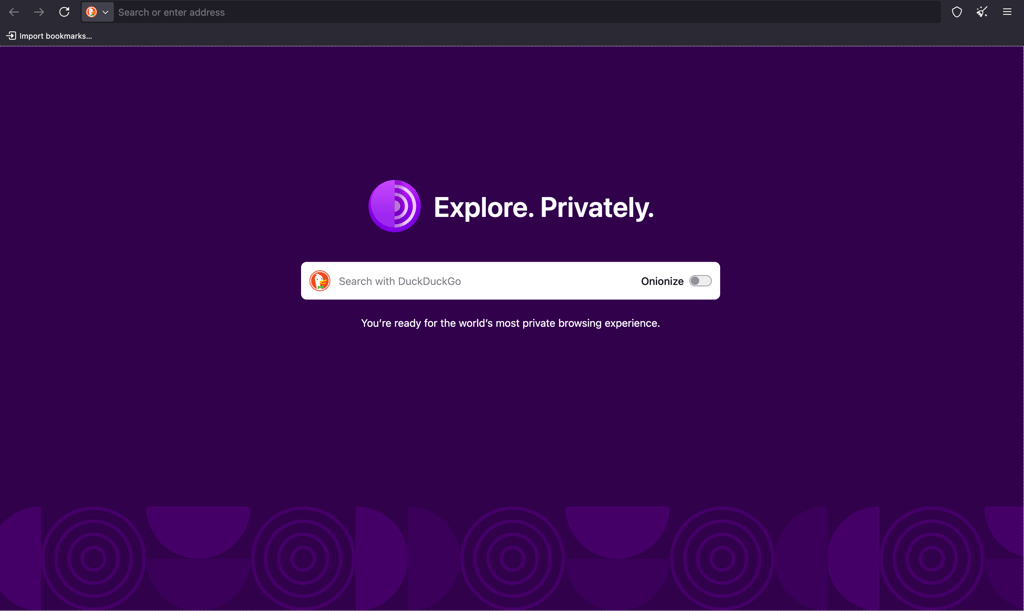
You’ll still need to use the Tor browser and specialized servers (Onion over VPN) to do so. Then you’ll be able to access .onion sites, which are exclusive to the dark web.
Cost
One of the most apparent differences in this Tor vs VPN comparison is the price. The Tor browser is completely free, albeit you’re encouraged to donate to the Tor Project to help fund the software’s development. Conversely, VPNs come in varying pricing options – from entirely free to massively expensive, with the cheapest VPN services somewhere in between.
Tor can be free because a non-profit organization maintains it, and volunteers provide the relay infrastructure. Meanwhile, high-quality VPNs can be quite expensive to maintain, making running one without a revenue stream impossible. If you’re strapped for cash, I recommend opting for freemium options instead of completely free VPNs, as the latter can be unsafe, making money by selling your data to third parties.
Trust
Another hotly debated issue regarding VPNs and Tor is trustworthiness. Now, a conspiracy-minded individual will tell you that neither is 100% trustworthy, and there’s some truth to that. But the real answer is much more complicated.
Tor is trustworthy because it’s open-source and privacy-ensuring from a technical standpoint. To reiterate, your traffic is routed through multiple relays and encrypted numerous times, meaning there’s no single point of failure. However, since volunteers provide the nodes, there’s a chance that ill-intentioned parties, such as malicious hackers or government authorities, run some.
On the flip side, VPNs can vary in level of trustworthiness. Here are a few aspects that distinguish the most reliable no-logs VPN services.
Ease of use and compatibility
Most VPNs are made as an essential cybersecurity tool for the layperson. That means they must be as easy to use as possible regardless of tech savviness. Moreover, VPN apps are compatible with many devices, not just computers and smartphones. The most notable difference is that you can install a VPN on a router.
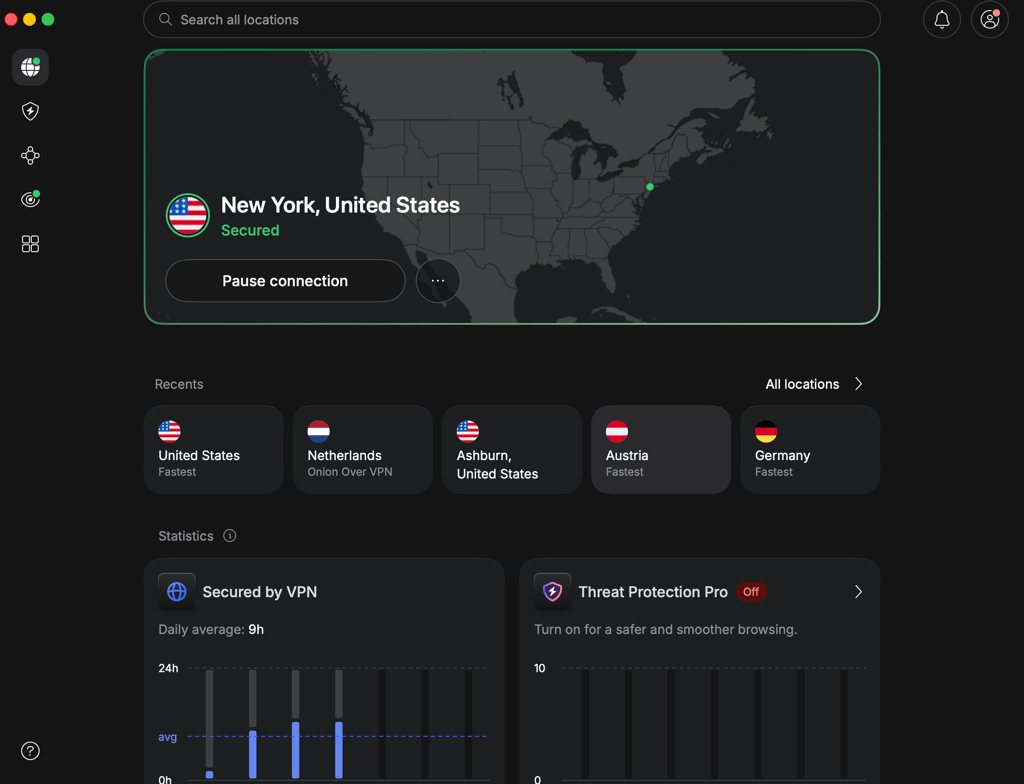
Meanwhile, the Tor browser is a specialized tool made by technical experts without regard for the average web user. Plus, even though Tor is available on mobile and this version has improved in recent years, most recommend sticking with the desktop version for peak security.
P2P file sharing
Although Tor supports peer-to-peer file sharing, it’s neither ideal nor recommended to do so. First, the slow connection speeds will drag the download process for eternity. Secondly, the excess traffic will negatively affect everyone else using the Tor network.
Luckily, numerous VPNs for torrenting are tailor-made for this activity. They ensure absolute anonymity, blazing-fast download speeds, and extra safety measures like a kill switch to prevent IP leaks.
Customer support
Since VPNs have a diverse range of use cases and apps, it’s only natural that customers are more likely to encounter issues. Plus, a large portion of users aren’t tech-savvy or interested in troubleshooting problems themselves. Thus, VPN services invest heavily in top-quality customer service. That means offering 24/7 live chat, detailed guides, and FAQs.
The Tor Project doesn’t have the resources to provide urgent assistance to users and instead relies on community-provided support. That means you’ll have to dive into the official forum for guidance.
When should you use Tor?
As you may have deduced, Tor is a specialized tool with only a handful of particular use cases. Let’s briefly reiterate them one by one.'
Accessing the dark web
The Tor browser is the primary method of accessing the dark web. It immediately works without special configuration and allows you to enter .onion sites. However, some precautions must be taken.
For example, it’s recommended that you stick with the default version and don’t customize it with add-ons or extensions. You must do this to maximize anonymity and become indistinguishable from other users. To add to this, you should keep the browser window at the default size because even your monitor resolution settings can be used to fingerprint you online.
Bypassing censorship
People worldwide use Tor as their go-to method to bypass online censorship and surveillance. The tool is free and readily available almost everywhere (unless the local government and ISPs block access). Journalists and political activists also use it to avoid prosecution while dealing with information that could land them in hot water. In short, it’s a critical tool for freedom of speech.
Anonymously accessing the web
Technically, you can use the Tor browser as a privacy-centered alternative to mainstream browsers to access the regular internet. And while there’s nothing wrong with that, it’s not ideal due to the aforementioned connection speed and convenience issues.

Also, there are plenty of choices regarding reliable privacy-focused web browsers, such as LibreWolf or Waterfox. At the very least, you can enhance your favorite web-surfing tool with a VPN browser extension to hide your identity online.
When should you use VPN?
Virtual private networks are incredibly versatile, making it difficult to outline every possible use case. I’ll cover the most popular ones below, but remember that you’ll be doing yourself a favor by always keeping a VPN enabled.
Unblocking region-locked content
VPNs should be your go-to choice regarding geographical restrictions of any kind. The top services have hundreds of servers scattered worldwide for unlocking exclusive content. You can use a VPN to access foreign movies, TV shows, video games, online publications, websites, and more.
Torrenting
You should use a high-quality and secure VPN whenever you want to download something using P2P technology. It will accomplish everything you need, including masking your IP address, bypassing torrent restrictions, and keeping download speeds sky-high.
Securing public Wi-Fi
A VPN is necessary if you frequent publicly available Wi-Fi networks, which are a breeding ground for malicious hackers. Without a VPN, your online activities are completely exposed to others on the network and vulnerable to interception. That means your browsing history, personal data, and payment information are ripe for the taking.
Bypassing censorship
Just like Tor, a VPN can bypass censorship and hide you from mass surveillance. The bright side is that your connection speed doesn’t take a severe hit with one. Furthermore, the most secure VPNs provide more options for tackling digital censorship measures. For example, you can utilize specialized proxies, traffic obfuscation, a double VPN, Tor over VPN, and many more features.
Extra tools offered by VPN services
A compelling argument for choosing VPNs over Tor is the abundance of extra tools frequently included. These features can be geared toward extra security, convenience, anonymity, improved torrenting performance, and more. Here’s a glimpse at what you can encounter:
- Ad blocking. A VPN with ad-blocking capabilities can protect you from adware and improve page loading times by eliminating online advertisements.
- Split tunneling. This feature lets you pick which apps or websites should go through the VPN tunnel.
- Port forwarding. You can improve connectivity with outside sources by opening specific connection ports.
- Dark web monitoring. Security-centered VPNs will scour leaked databases to ensure your credentials aren’t exposed to bad actors.
- Password management. Some VPNs are packaged with password managers for enhanced account security.
Using Tor and VPN together
There’s no need to argue about Tor vs VPN when you can combine the two for immense security and privacy benefits. However, it’s essential to distinguish between Tor over VPN and VPN over Tor because the two offer different benefits.
Tor over VPN is arguably the superior method. It involves connecting to a VPN server first, then accessing the Tor network. That means your initial IP address is protected, and your ISP believes you’re using a VPN. Meanwhile, you can access .onion websites as if using the Tor browser.
The other method is VPN over Tor, and it’s basically the inverse. It’s more challenging to set up and results in encryption on your exit node.
Conclusion
Tor and VPNs primarily serve different purposes yet have some overlap. The two can hide your identity and IP address and bypass censorship. Furthermore, you can combine them for exceptional privacy with minimal adverse effects. You’ll also be hard-pressed to find a digital privacy advocate who doesn’t approve of one or the other.
Ultimately, Tor is a free tool for accessing the dark web and improving overall anonymity at the cost of connection speeds. Meanwhile, the only downside of a top-quality VPN is the price. Besides, a VPN is much more versatile than Tor, and you won’t notice a connectivity dip.
Consider trying NordVPN if you want to see the best of both worlds. The service includes specialized Onion over VPN servers for experiencing Tor over VPN benefits. Plus, you can get it free for 3 days on the Google Play Store. Otherwise, take advantage of the 30-day money-back guarantee.
More guides from Cybernews
What is Tor and how does it work: learn more about Tor
Are VPNs safe: find out how safe VPNs are
What is WireGuard: learn about the fastest VPN protocol
FAQ
What is Tor?
Tor can refer to the Tor browser or the Tor network. The first is a web browser for significantly improving your anonymity and accessing the dark web. To do this, it connects you to several encrypted nodes from the Tor network, a worldwide array of volunteer-operated servers.
Is Tor a VPN?
No, Tor is not a VPN service. A conventional virtual private network connects you to one remote server of your choosing. Meanwhile, Tor connects you to multiple random servers scattered worldwide and hides your location behind numerous IP addresses and layers of encryption.
Does the Tor browser hide your IP?
Yes, the Tor browser is an excellent way of hiding your IP address. It does so by rerouting your traffic through multiple encrypted nodes worldwide, thus masking your IP behind multiple other ones.
How secure is Tor?
Tor is one of the most secure web browsers available. It protects users with multiple layers of encryption and takes extra precautions to keep them as anonymous as possible. However, it’s worth noting that it might not protect you from viruses and malware you may encounter on the dark web.
How secure is a VPN?
The level of security you gain from a VPN depends on your provider. Generally speaking, most VPNs are secure because they utilize cutting-edge encryption to keep malicious hackers at bay. Plus, some include bonus protection tools, such as ad blockers. We recommend NordVPN if you want to experience the highest level of security.